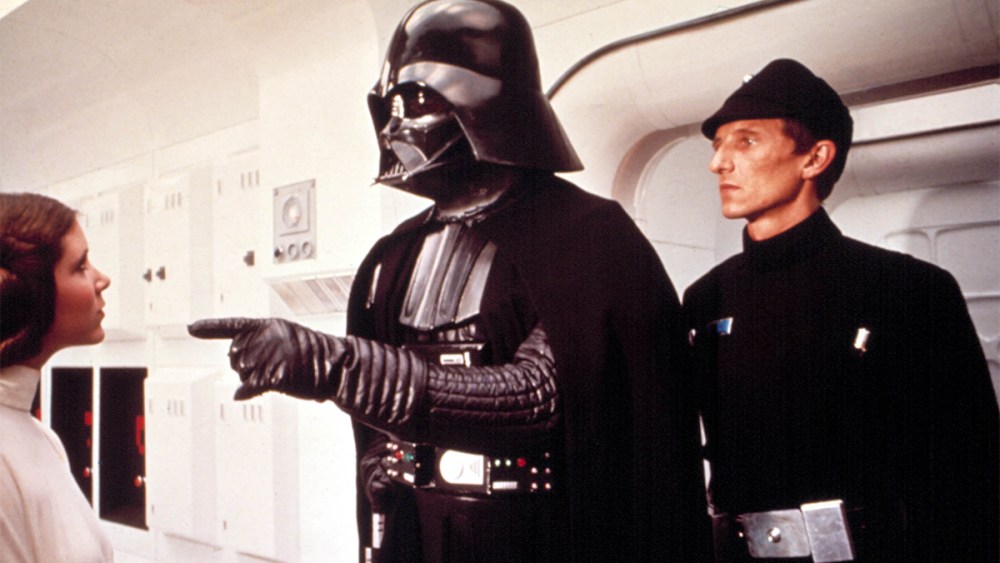
The Force is strong with this one.
In honor of “Star Wars” Day, Nielsen has shared some insights into people’s viewing habits around the beloved franchise, which show that it remains incredibly popular nearly 50 years after it began.
Per Nielsen data, U.S. viewers viewed 33 billion minutes (equivalent to 550 million hours) of “Star Wars” content across linear TV and streaming in 2025. Disney+ serves as the streaming home to all things “Star Wars,” with the Mouse House having acquired the franchise in 2012.
The “Star Wars” films accounted for the biggest share of the viewing at 44.2%. The live-action shows made up 38.9%, while “Star Wars” animated projects accounted for 16.8%. Documentaries about the franchise accounted for just 0.2% of all viewing. “A New Hope” was the most viewed title, followed by “The Phantom Menace” and then “Rogue One.”
“Andor” was the most-viewed live-action series with 7.4 billion minutes, boosted by the fact the show released its highly-anticipated second season between April and May 2025. It made the Nielsen Top 10 Streaming Originals chart for six weeks straight in that time. After “Andor,” “Skeleton Crew” and “The Mandalorian” were the most-viewed shows.
Nielsen also broke down data for May the 4th, 2025, during which fans viewed 637 million minutes (or 10.6 million hours) of “Star Wars” content altogether. “Andor” was the most-viewed “Star Wars” title that day, again not surprising given that it was releasing new episodes at the time. It was followed by “A New Hope,” “Phantom Menace,” “Empire Strikes Back,” and “Revenge of the Sith.” The full top 10 from “Star Wars” Day 2025 can be seen below.

Finally, Nielsen broke down what “Star Wars” content is the most popular by age group for the first quarter of 2026. “The Mandalorian” is the most popular among Gen Alpha and Baby Boomers, while Gen Z is into the animated series “The Clone Wars.” Millennials and Gen X enjoyed “Andor” the most.
PakarPBN
A Private Blog Network (PBN) is a collection of websites that are controlled by a single individual or organization and used primarily to build backlinks to a “money site” in order to influence its ranking in search engines such as Google. The core idea behind a PBN is based on the importance of backlinks in Google’s ranking algorithm. Since Google views backlinks as signals of authority and trust, some website owners attempt to artificially create these signals through a controlled network of sites.
In a typical PBN setup, the owner acquires expired or aged domains that already have existing authority, backlinks, and history. These domains are rebuilt with new content and hosted separately, often using different IP addresses, hosting providers, themes, and ownership details to make them appear unrelated. Within the content published on these sites, links are strategically placed that point to the main website the owner wants to rank higher. By doing this, the owner attempts to pass link equity (also known as “link juice”) from the PBN sites to the target website.
The purpose of a PBN is to give the impression that the target website is naturally earning links from multiple independent sources. If done effectively, this can temporarily improve keyword rankings, increase organic visibility, and drive more traffic from search results.

Leave a Reply