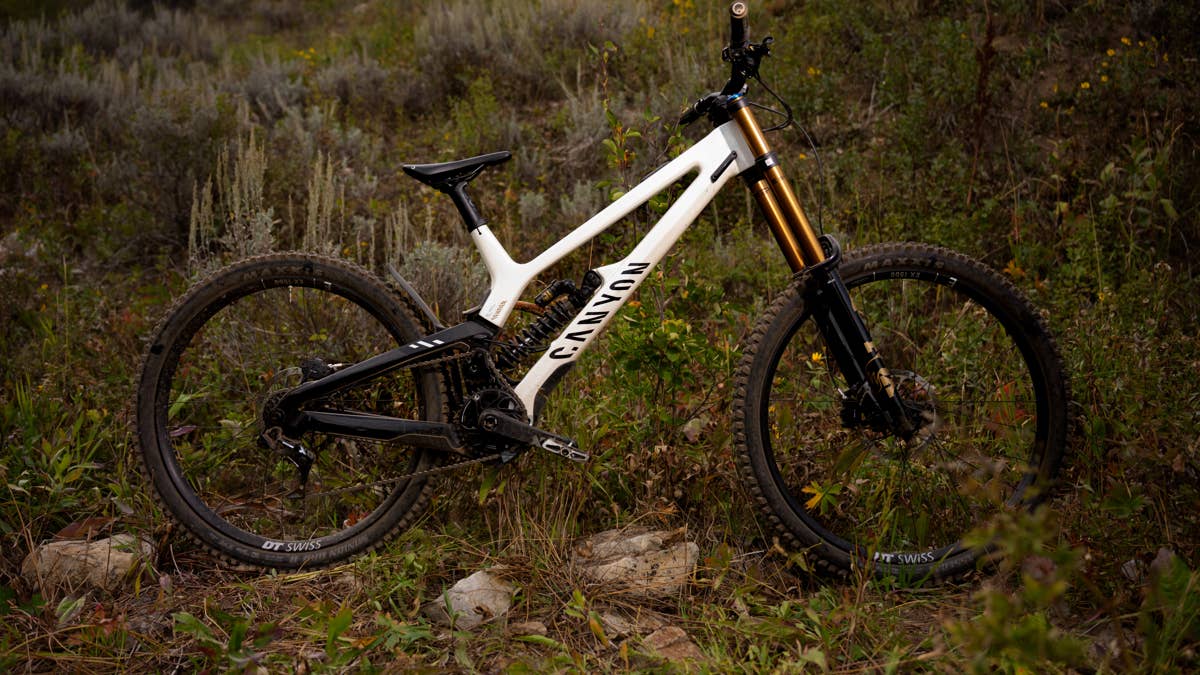
There’s no feeling in the world quite like riding an exquisitely-specced mountain bike in gnarly terrain at high speeds. It’s a moment where ridiculous levels of engineering, industrial design, and manufacturing come together to spoil the plans physics normally lays for us. It’s a sensation that the best racers in the world get to experience every race day on the World Cup, and it’s the feeling I felt while riding the Canyon Sender CFR. In short, it’s really addicting.
Downhill bikes are about as specialized a tool as there is in mountain biking. To me, they’re the equivalent of something like a triathlon time-trial bike or the kind of kitted-out Jeep you’d find deep in the Moab desert. Or a pair of 203cm alpine racing skis. They’re incredibly impractical for most kinds of riding, but when it comes time to beat the clock on a DH track at your local bike park, there’s no better tool for the job.
Canyon’s Sender CFR (short for Canyon Factory Racing, their moniker for their highest-end team-issue bikes) is one of the fanciest downhill bikes on the market right now. The model has been around for a long time, with various version bouncing between freeride and racing intentions. With the introduction of the Torque freeride bike a few years ago, the current iteration of the Sender takes everything the team in Koblenz, Germany has learned over the past decade of elite World Cup racing to create the ultimate race-winning rig.
It features a unique high-pivot suspension linkage, a mullet-only wheel configuration, Fox Factory suspension, and a bunch of clever tricks up its sleeve to deliver a ground-hugging speed machine that absolutely erases the trail below.
Mark Riegel
2026 Canyon Sender CFR CLLTV Specs
- Frame: Sender CFR Carbon with KIS system
- Size Tested: L
- Sizes Available: S, M, L, XL
- Groupset: SRAM X01 DH
- Brakes: SRAM Maven SLV, 200mm HS2 rotors
- Fork: Fox 40 Float Factory
- Shock: Fox DHX2 Factory
- Wheels: DT Swiss EX1500 with kickback hub
Geometry, Sizing, Components, and Tech
There’s a lot going on with Canyon’s Sender CFR, so I’ll start with the basics. It’s a super-slack racing bike with 200mm of travel front and rear, a ton of in-frame adjustments, and a linkage driven high-pivot suspension that allows the bike’s wheelbase to grow as you compress the suspension. All of those things equate to insane stability and traction at speed.
Basic geometry on the size L includes a 63-degree head angle, 438mm chainstays (same across all sizes), a 1303mm wheelbase, 495mm reach, 635mm stack, and a low 754mm standover height.
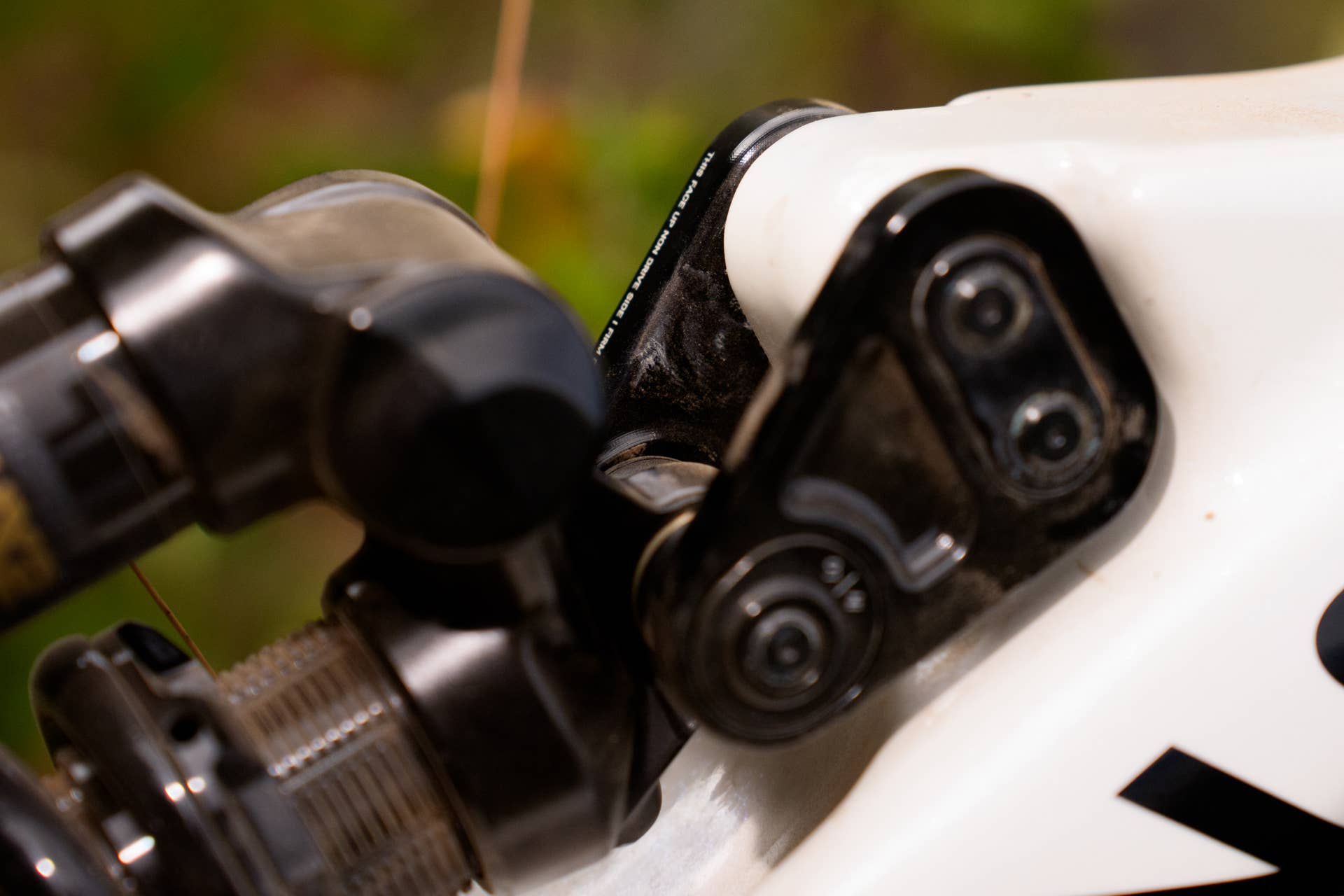
Progression adjustment on the shock mount.
Mark Riegel
View the 3 images of this gallery on the
original article
Canyon designed the frame to be highly adjustable, mainly to let their pro athletes configure the bike to the huge variety of tracks on the World Cup circuit. Those adjustments include swappable headset cups to change the reach by +/- 8mm, a flip chip to adjust +/- 5mm of bottom bracket heigh, and a variable shock mount that changes shock progression. The frame also includes Canyon’s K.I.S. steering stabilizer, which can be adjusted or removed entirely.
The build on the Sender CFR CLLTV leaves nothing to be desired, and it’s pretty much exactly how I’d spec my bike if my goal was to chase World Cup podiums. Fox’s Float 40 dual-crown fork works insanely well (the newest version with the updated air spring and Grip X2 damper blows the older version out of the water), the new DHX2 coil shock is highly adjustable and works perfectly with this frame, and the Maven SLV/XO1 DH brake and drivetrain combo make the bike go and stop on command.
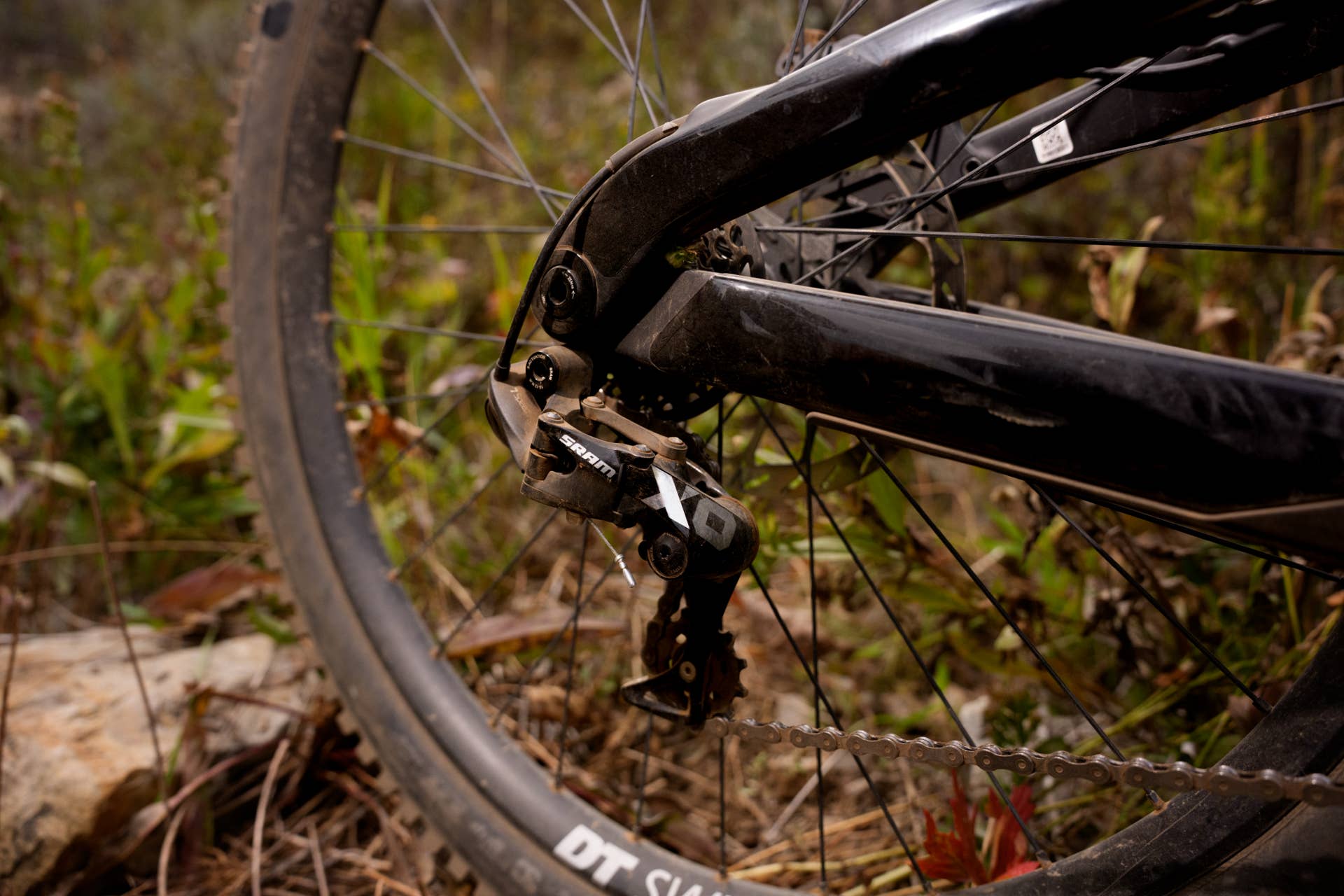
SRAM XO1 DH drivetrain.
Mark Riegel
View the 2 images of this gallery on the
original article
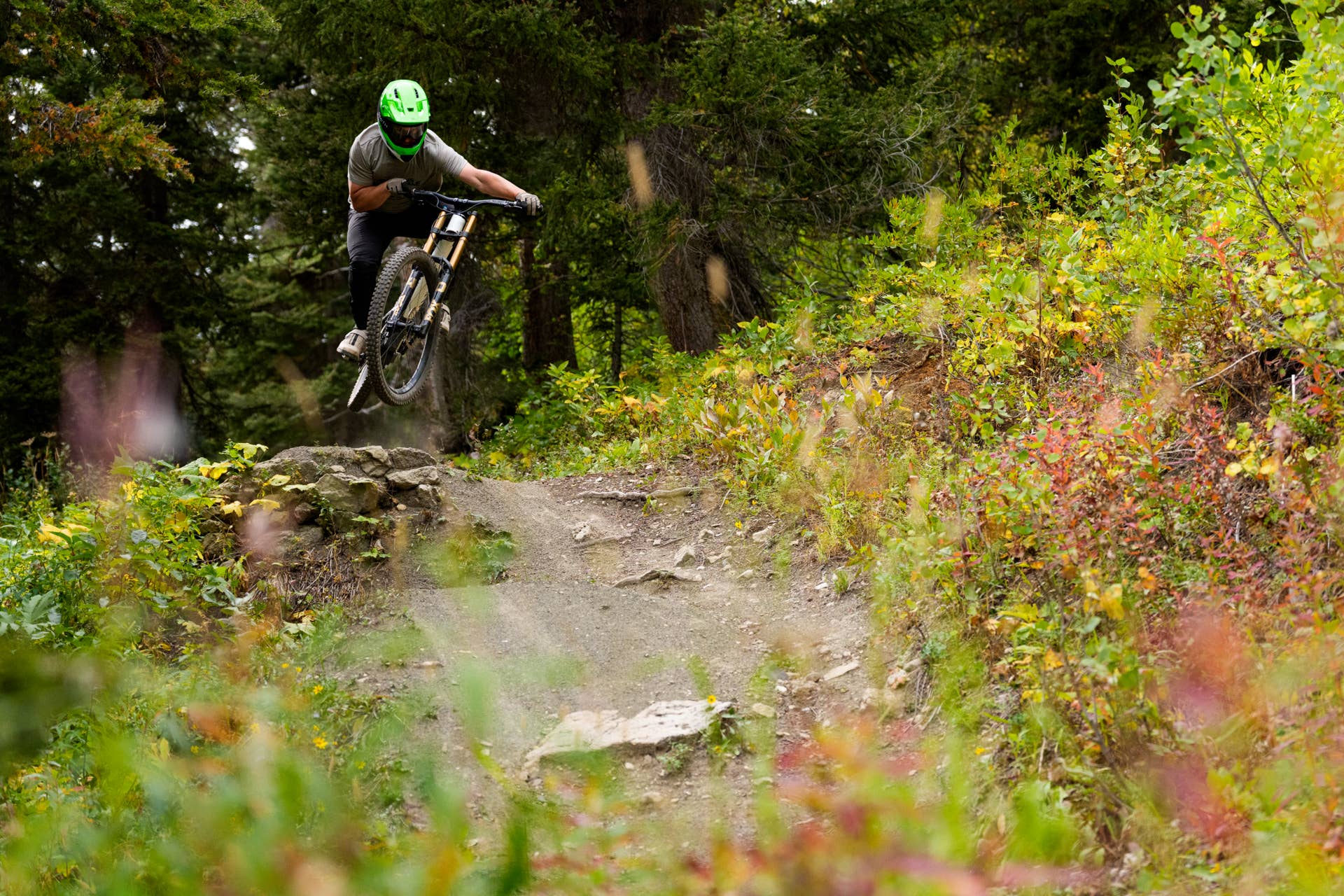
The frames high pivot linkage provides a rearward axle path that prioritizes traction and a butter-smooth feel over liveliness and agility, but when you’re going 40 miles and hour through the woods, that’s exactly what you want. The linkage design and use of the DT Swiss kickback hub creates an astounding lack of pedal kickback, meaning you can just stand up and absolutely mow down rocks, roots, and rough sections of steep trail. Finally, the high 130% of anti-rise keeps the bike very composed under heavy braking (you’ll be doing a lot of that on this bike), meaning it doesn’t want to throw you over the bars the instant you drop anchor.
Mark Riegel
How Does the Canyon Sender CFR Perform?
Watching pro riders like Troy Brosnan, Marine Cabirou, and Henri Kiefer pilot the Sender CFR at the World Cup easily proves that this bike is among the fastest in the world on any given day. But those folks possess superhuman ability to ride bikes, so how does the Sender CFR fare under a mere mortal like me?
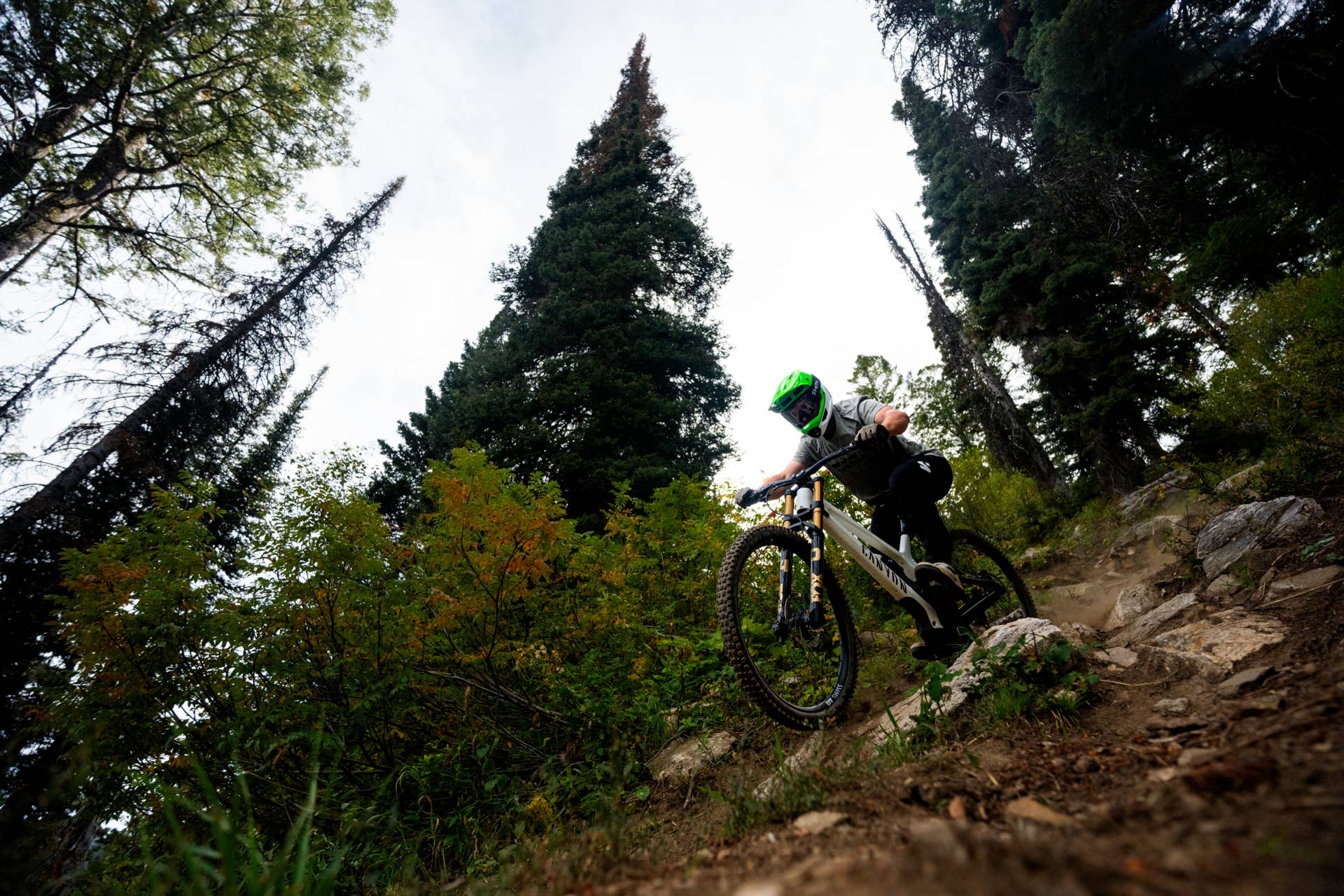
This summer and early fall, I took the bike out missions to unlock speed wherever I could at two local bike parks and on my local shuttle trail network. Grand Targhee built a brand-new DH racetrack to host a stop of the Mountain States Cup, which worked out to be the ultimate testing ground for this rig. I also spent plenty of time riding trails like Fuzzy Bunny and Lithium on Teton Pass, as well as lapping the new jump trails at Jackson Hole Mountain Resort.
Mark Riegel
With so many possible configurations, I decided to test the bike in its stock form first, then worked my way through each configuration before ultimately settling on the stock reach and BB height, and the more progressive shock mount setting. I also raised the bar height slightly to gain a little more front-end height.
What I learned is that the Sender CFR makes it wildly easy to ride really, really, fast. I’ve ridden several DH bikes in the past (including an older version of the Sender), and the difference in stability, traction, and damping is wild. I’ve quite literally never ridden a bike this smooth. I found myself consistently blowing my Strava times out of the water on familiar trails, all while thinking the bike actually felt slow when riding. Turns out that smoothness really changes your perspective of speed on a trail.
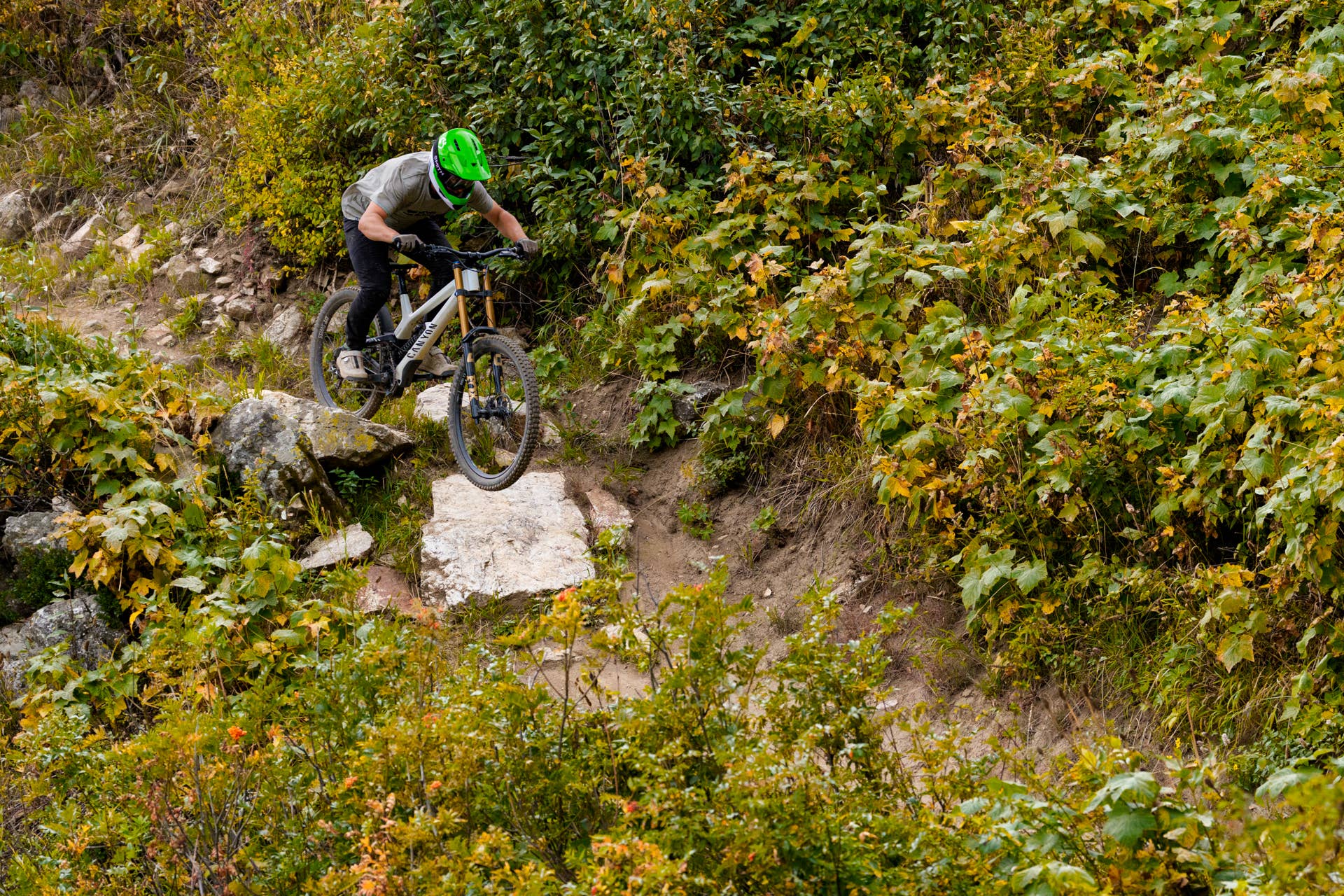
In more detail, the bike feels extremely balanced front to rear, leading to a very intuitive ride that begs you to push it harder and faster than you’ve ever ridden before. I’ve found that a lot of high-pivot bikes tend to understeer in corners (the extending wheelbase causes the rear end to get a bit bogged down, meaning you have to lean over more and force your cornering a little harder), but the Sender’s shorter chainstay and smaller rear wheel keeps cornering very natural even with the growing wheelbase. Despite the ground-hugging suspension, the bike actually feels decently agile, which is a boon in steep, techy terrain.
Mark Riegel
Under braking, the bike doesn’t get twitchy or bucky at all, meaning I could carry more speed into braking zones, brake later, and consequently go faster overall.
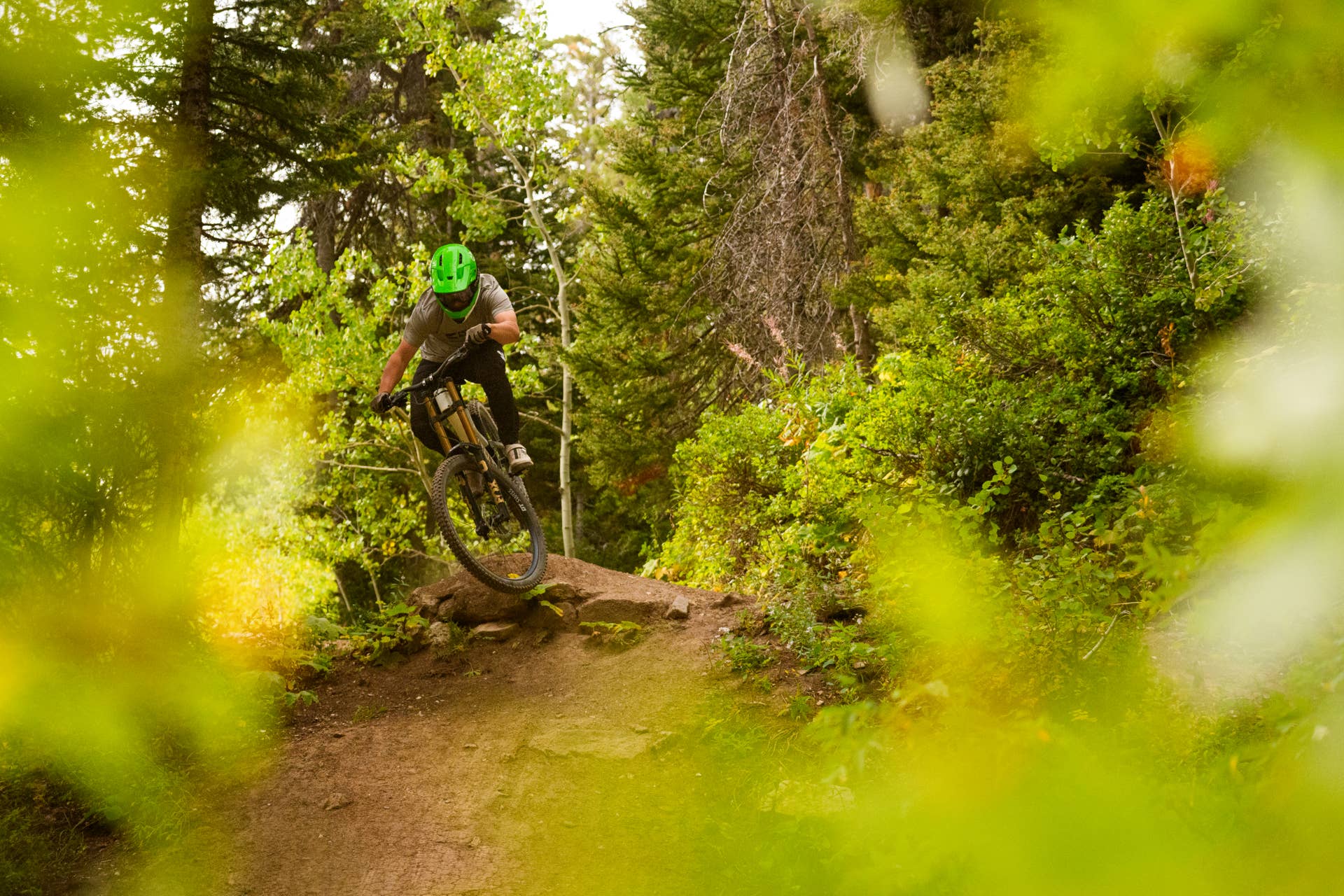
The bike shines on rough, steep, and technical tracks, but is quite fun on smooth jump trails as well with the right setup. Dropping the shock into the linear setting makes this thing feel like a magic carpet in the most f*cked up rock gardens imaginable (eg. JHMR’s Dirty Harry trail), but swap it over to the progressive setting for a jump sesh and you’ll be able to boost and style it out all day long.
Living With the Bike
As a bike that’s built to be abused at the highest speeds and in the toughest conditions, the Canyon Sender’s durability is impressive. After a whole season of riding, the only maintenance I performed was a brake bleed and normal bolt checks. The weatherproofing on the frame is impressive, and from a self-serviceability standpoint, everything checks out.
Sure, the linkage is quite complex, but after pulling it apart for inspection, I found that everything was easy to work on, and Canyon’s service team offers loads of replacement parts if anything were to break. The component spec was clearly chosen with both durability and high-end performance in mind, making this a no-brainer choice for a rider looking for a reliable downhill race bike straight out of the box.
Mark Riegel
Who is the Canyon Sender CFR Best For?
This speed machine is clearly targeted at one kind of rider: someone who’s actively racing downhill bikes. It’s a fun park bike, but there are better options for those looking to just hit jumps all day long. If you’re a rider who’s focused on racing, or lives near a bike park that’s more focused on catering to tech riding, the Sender CFR is one of the best choices on the market right now.
At $7800, it’s not a cheap option, but given the component spec and value you get right out of the box, I’d say it’s actually a pretty good deal on a brand-new high-end bike.
PakarPBN
A Private Blog Network (PBN) is a collection of websites that are controlled by a single individual or organization and used primarily to build backlinks to a “money site” in order to influence its ranking in search engines such as Google. The core idea behind a PBN is based on the importance of backlinks in Google’s ranking algorithm. Since Google views backlinks as signals of authority and trust, some website owners attempt to artificially create these signals through a controlled network of sites.
In a typical PBN setup, the owner acquires expired or aged domains that already have existing authority, backlinks, and history. These domains are rebuilt with new content and hosted separately, often using different IP addresses, hosting providers, themes, and ownership details to make them appear unrelated. Within the content published on these sites, links are strategically placed that point to the main website the owner wants to rank higher. By doing this, the owner attempts to pass link equity (also known as “link juice”) from the PBN sites to the target website.
The purpose of a PBN is to give the impression that the target website is naturally earning links from multiple independent sources. If done effectively, this can temporarily improve keyword rankings, increase organic visibility, and drive more traffic from search results.
Streaming Film
Nonton Film gratis
Jasa Backlink
Download Anime Batch

Leave a Reply