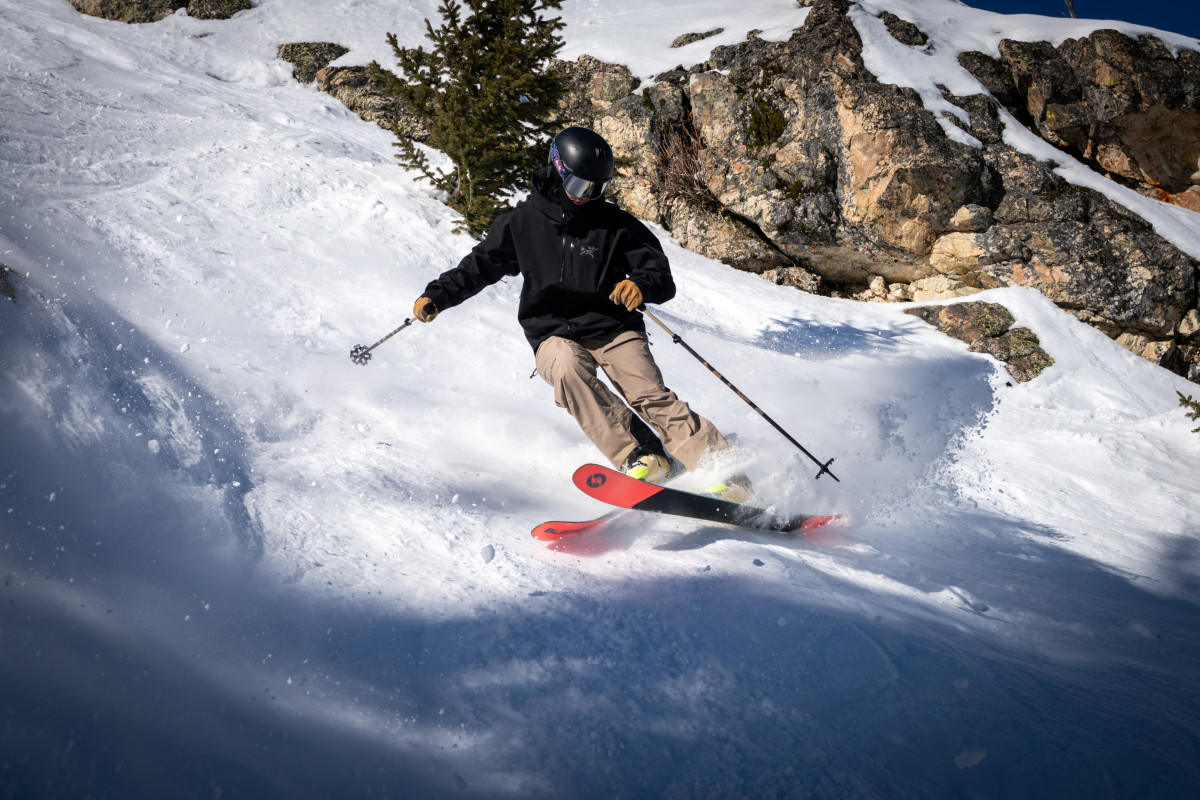
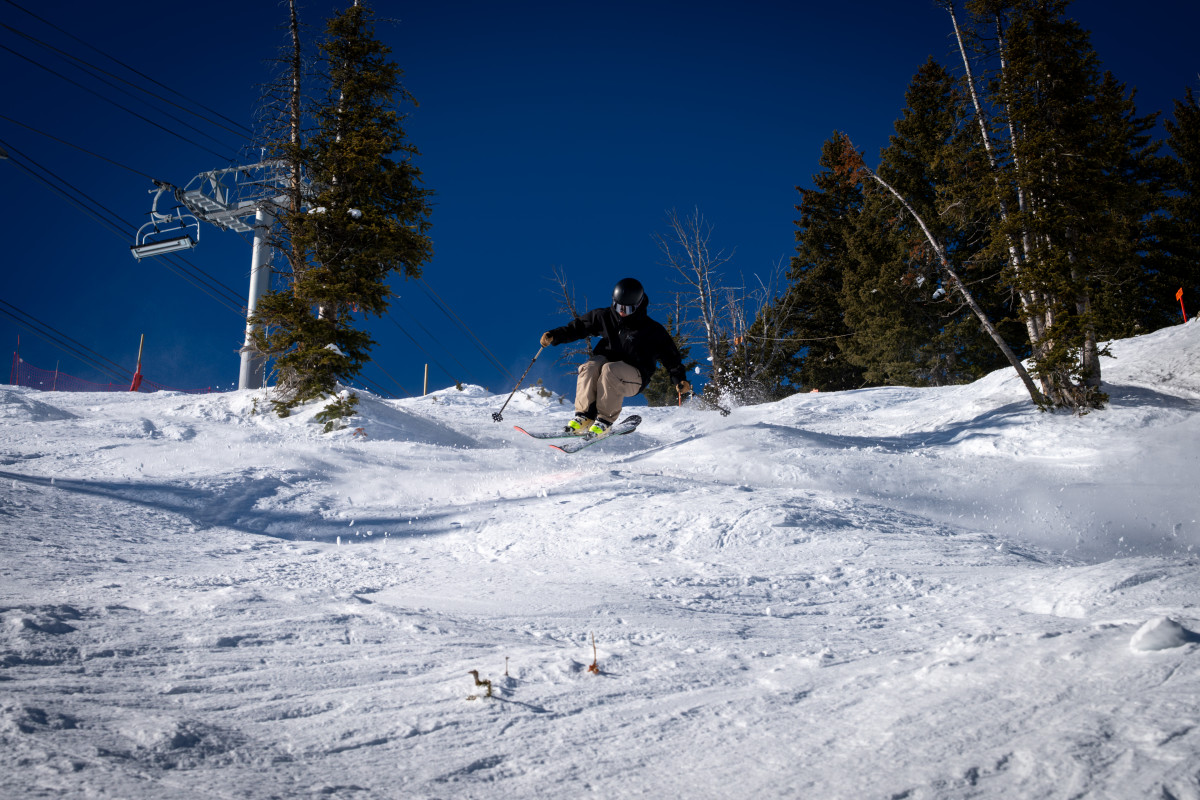
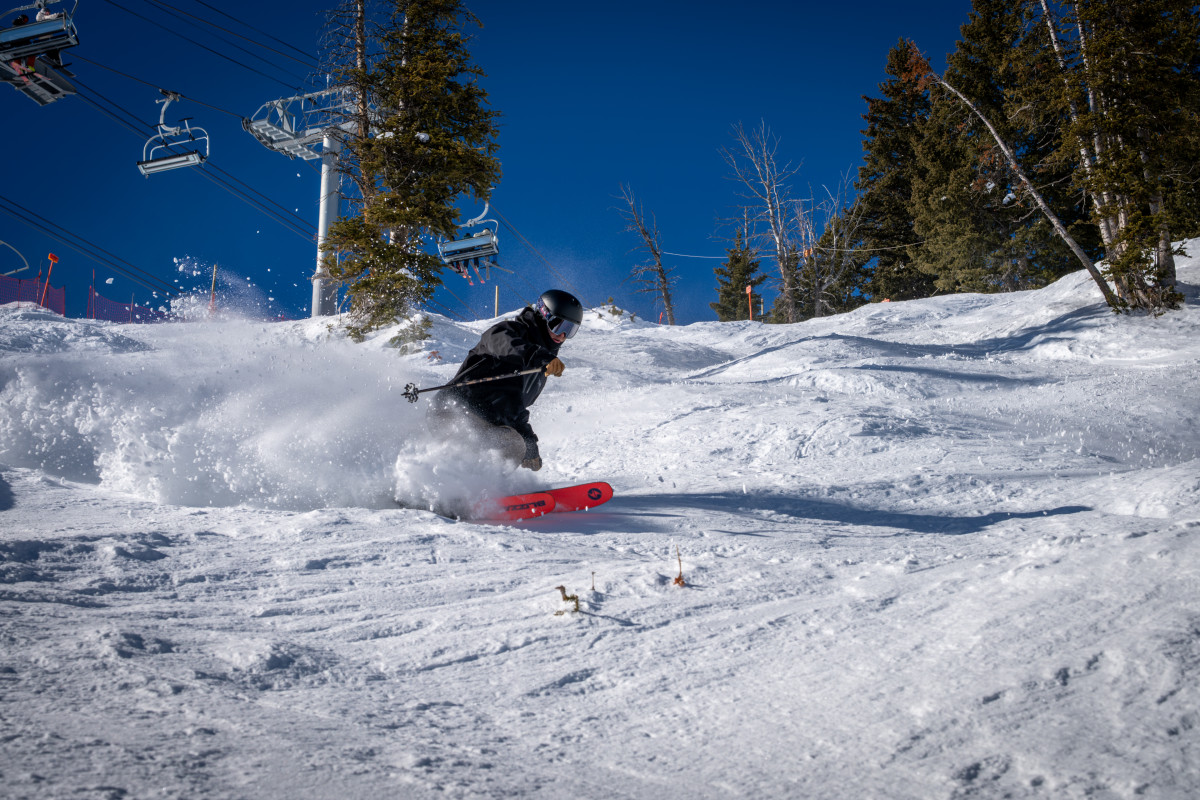
Whether you know professional skier Caite Zeliff as the Queen of Corbet’s Couloir or from her massive hucks on the big screen with MSP, you know she’s no stranger to big mountains.
Raised on the slopes of New Hampshire’s Cranmore Mountain, Zeliff took her skills from icy eastern gates to the Tetons and then to some of Alaska’s most formidable terrain to build her career.
Along the way, Zeliff found Morgan McGlashon, another ski racer turned big mountain aficionado. McGlashon was born and raised in the Tetons and spent her life playing in the range, even becoming the youngest woman to ski the Grand Teton at 18. After getting a degree in geology, McGlashon returned to the Tetons and subsequently became the youngest female ski guide at the prestigious outfitter, Exum Guides.
The parallels in Zeliff and McGlashon’s lives created a friendship that ran deeper than just skiing. Ultimately, this friendship led them on a ten-day expedition in Alaska’s Tordrillo Mountains.
You can watch Zeliff and McGlashon ski human-powered lines and navigate winter camping in My Ride or Die below, and keep reading for more.
The 2026 POWDER Photo Annual is here! Look for a print copy on a newsstand near you, or click here to have a copy shipped directly to your front door.
Zeliff and McGlashon are both undeniably total badasses.
Both of their pursuits on skis, whether human-powered up the toughest lines in the Tetons or heli-accessed in Alaska, take a lot of grit and bravery. However, after a big crash left her with a brain injury, Zeliff has started to explore a new approach to her career that emphasizes a duality between doing things with grit and bravery and slowing down and finding joy.
As familiar as she is with big-mountain lines in Alaska, Zeliff has often skied them by helicopter. McGlashon’s skill set as a ski mountaineer and guide was not only invaluable to the trip but also forced Zeliff to be a beginner again in some ways, which, in turn, forced her to slow down and find joy in learning again.
Zeliff and McGlashon.
Emily Sullivan
There’s no doubt the lines skied in My Ride or Die are impressive, but the film also explores the more complex themes of being a beginner again, trusting your friends, and the deeper bonds the mountains can form between people.
It’s a far cry from the shredporn-heavy films skiing sees too often, and gives a more vulnerable look at two incredibly strong skiers with a healthy dose of bluebird pow.
Lastly, having just spent a week in a tent in the backcountry with Zeliff myself, I can say she’s got the winter camping thing absolutely dialed now.
Related: Does Skiing Matter When The World Is Burning?
“Mercy” is built around two hooks that feel destined to inspire a lack of enthusiasm among critics. The first is that it stars Chris Pratt, who has not exactly found favor in the twelve years since he held down the center of “Guardians of the Galaxy.” In that movie, he seemed a natural-born star; his likability was part of the film’s chattery spontaneous pre-Marvel-overkill flow. Yet Pratt started to get swallowed up by the top-heavy franchise movies he was in — and it didn’t help that reviewers, weirdly, seemed to hold him almost responsible for his character’s stalker ethics in “Passengers” (2016). Over those last dozen years, he became a B-list presence.
Pratt factor aside, the premise of “Mercy” makes it sound like the sort of thin, doctrinaire anti-technology, anti-police-state thriller that Arnold Schwarzenegger would have starred in 40 years ago (and did, in fact, when he made “The Running Man”). But the movie turns out to be a notch or two better than you expect.
In the not-so-far-away future, Pratt’s Chris Raven is an LAPD officer — decent at heart, dirty around the edges — who wakes up after a bender to learn that he has been arrested and strapped into a digitally wired interrogation chair. Accused of killing his wife in cold blood, he is now the latest defendant in the Mercy program, a tolerance-is-for-suckers anti-crime experiment that sounds like pure government-meets-big-tech future-shock fascism. You’re placed on trial in front of an AI-generated enforcer named Judge Maddox (played, in a witty piece of casting, by the elegant Rebecca Ferguson), who is in fact going to be your judge, jury, and executioner. According to the law, you’re presumed guilty until proven innocent. Raven has just 90 minutes to defend himself and call up any evidence he wants. If the probability of his innocence dips below 94 percent (i.e., reasonable doubt), he’ll go free. If it doesn’t, he’ll be executed when the clock runs out.
This real-time thriller, in the tradition of “D.O.A.” and “Timecode,” is designed to make us go, “God, what a nightmare system.” And since the prospect of death-by-virtual-judge-by-evidentiary-algorithm sounds like the sort of demagogic idea that might fit all too well into the place America could now be on its way to becoming, we see the timely parallels. Yet as moviegoers, we’re still bracing ourselves for a one-note dystopian thriller-satire.
The first surprise of “Mercy” is that the virtual courtroom Raven finds himself in, with images scrolling around like something out of a pulp version of “Minority Report,” isn’t stacked against him in the way we expect. I mean, it sort of is, but since Raven is free to dial up anything he wants (documents, witnesses, surveillance footage) at the touch of a keypad, he’s got a universe of investigative power at his fingertips. All the evidence will be judged fairly. And since he can zip from one surveillance-camera clip to the next, and use that ability to essentially go back in time, the sheer speed and density with which the clues pile up make “Mercy” an avidly watchable mystery, even if it’s got a rather standard conspiracy plot at its core.
Pratt’s Raven is like a Bruce Willis character from the ’90s, and if he simply headed out into the streets of L.A. to clear his name, the film might feel like wall-to-wall cliché. Instead, scenes of detective action flash by in a pinpoint moment rather than overstaying their welcome. “Mercy,” directed by Timur Bekmambetov (“Wanted”) with a crisp short-attention-span gusto (the film has three editors, and you can see why), is like “Minority Report” meets “Memento” meets “Cops” meets a crime-detective video game. It threads Raven’s investigation through a multimedia mixmaster. And Pratt is compelling in it. He got swallowed up in franchise-ville because he let himself become an actor of bland good vibes, but here he’s sharp and nasty and a bit “dark,” which looks better on him.
At first, of course, the evidence that points to Raven being guilty looks airtight. He and his wife, Nicole (Annabelle Wallis), were in the midst of divorcing, and we see him show up at the house the morning of the murder, angry and reckless, demanding to be let in; minutes later, Nicole is lying in a pool of blood, having been stabbed with a kitchen knife. After the crime, Raven headed to a bar and drank so much that he can’t even remember what happened. (That he spent the last year falling off the wagon, taking nips of whiskey in the garage, only makes him look more scurrilous.) Solving the crime will require quick detours into the lives of his loyal partner who was killed (Kenneth Choi); his new partner (Kali Reis), who seems the soul of trustiness; his blustery AA sponsor (Chris Sullivan); and his teen-brat daughter (Kylie Rogers).
Yet none of them is as fully realized a character as Judge Maddox. She’s a completely programmed presence, but Rebecca Ferguson, speaking in authoritarian tones of dulcet logic, endows her with that barely perceptible twinkle of AI “consciousness.” As the film presents it, the Mercy program is fascistic. And Raven, as we learn, was responsible for bringing to trial its very first defendant. It was a show trial, designed to prove the superiority of judgment-by-AI. But can an AI judge really judge the evidence? Actually, the movie’s sly joke is that an AI judge might be able to do that more objectively than a jury; but it also needs a little human factor to collaborate with. You expect “Mercy” to be anti-AI, but it might be the first film of its era — it will not be the last — to look at AI and ask, “Can we all get along?”
Louisiana has community health centers that can provide low- or no-cost pap smears and gynecological screenings, encouraging women in rural or low-income areas to seek care.
Powder aims to feature only the best products and services. If you buy something via one of our links, we may earn a commission.
Ski brands have reputations, and for an entire generation of skiers, Blizzard’s has undoubtedly been that of being the brand for hard-charging resort skiers looking for powerful on-piste skis and crud-blasting performance. With stiff, damp, directional skis like the Cochise, Sheeva, Anomaly, and Rustler dominating their lineup for the better part of a decade, it’s been a long time since Blizzard delivered a ski aimed at skiers looking for something more playful. They’ve long catered to skiers who come from a racing background, or at least know a thing or two about “traditional” ski technique. With the release of the all-new Canvas line, that’s all changed.
Designed with heavy input from their next generation of freeride athletes, the all-new Blizzard Canvas 108 is something we haven’t seen in a long time from Blizzard: a progressive twin-tip ski without a beefy, metal-reinforced core inside to stiffen things up.
At first glance, it harkens back to the days of the Blizzard Gunsmoke in the mid-2010s era, a twin-tip freeride ski that balanced playfulness and Blizzard’s hard-charging DNA to become a cult-favorite ride among skiers out West. But, after riding it for the better part of the early season here in the Tetons and Wasatch, I’ve found it’s truly something new for Blizzard.
View the 3 images of this gallery on the
original article
Blizzards are stiff and filled with metal, right? Not this one! The Canvas 108 is a stark departure from what we’re used to seeing from the Austrians at Blizzard.
Of course, the elephant in the room is the fact that this is a purpose-built twin tip ski, with a suggested mount point closer to center than most. The tip and tail shape is still quintessentially Blizzard (with smoothly rounded taper lines paired with twin-rocker construction and good amount of camber underfoot. The size-specific turn radius (19 meters for the tested 186 length) falls squarely into the middle of the road, balancing both a quick-turning character with more high-speed stability.
The Canvas 108 skips the stiff nature of just about every other ski in the existing blizzard lineup–its poplar and paulownia wood core provides a soft, poppy, and very round flex profile. I was actually surprised to learn that a small strip of metal runs down the center of the ski, since it doesn’t add a “heavy metal” feel to the ski by any means. It’s no noodle, but I found it quite easy to flex. In fact, I can butter up onto the tips of these without too much effort–something I’ve never been able to do with any other Blizzard ski.
It’s a Blizzard, so yes, it can carve.
Griffin Kerwin
That softer flex also comes at the cost of some damping–an attribute many skiers have loved Blizzard’s other freeride skis for. However, it’s clear the design/athlete team wanted to do something different, so instead of all-out crud-busting dampness, they went in the direction of loads of energy, poppiness, and a ski that can ollie and boost off features like a skateboard.
The poppiness is further enhanced by how light the ski is. At 1870g per ski, the 186cm length falls closer to the category of backcountry touring skis than mid-fat all-mountain rippers.
For reference, I skied these mounted with a Look Pivot 2.0 and Atomic Remedy 130 boots.
On-Snow Performance:
Ski testing so far this winter has been much more challenging than most. Most resorts struggled to open on time, and warm temperatures combined with rain to ruin an already fragile snowpack once they did. I’m used to skiing pow starting around Thanksgiving here in the Tetons, so I was a bit bummed to be stuck riding chopped-up man-made snow on various Slopes of Hope/Ribbons of Death for most of December.
My mind wants to immediately compare it to other Blizzard skis to paint a picture about it, but I want to describe it for what it is, not what it isn’t. That being said, the Canvas 108 might as well have been the perfect ski for our collective early-season situation. The first word I’d use to describe this ski is very simple: “fun.” But it goes far beyond that.
The Canvas 108 is extremely easy to ski, initiating turns without much effort, and offers a substantial amount of “draw” for a twin twip (the feeling of a ski pulling you into a carved turn and across the fall line). It is a Blizzard after all, and these guys have a whole video series extolling the virtues of “The Turn,” so that responsiveness is not all too surprising. In my experience, most twin-tipped skis with a mount point this close to center don’t offer that, instead providing a more centered, neutral, and pivot-y character.
The quick-pivoting nature of the Canvas 108 makes steep bumps, chutes, and billygoat-y skiing a breeze.
Griffin Kerwin
However, the Canvas 108 doesn’t need your full front-of-the-boot attention to feel like you can control it. In fact, it wants to be pivoted, smeared, and buttered just as much as it wants to carve. It’s stupidly fun on skied-out groomers littered with sidehits where you’re carving a few turns, slashing some soft bumps, and lining up sidehit airs to spin, shifty, or perform whatever aerial maneuvers you please. In steeper trees, bumped out or chalky snow, the ski feels similarly alive, with the light weight and impressive pop making it easy to air over moguls, press through troughs, and drift high-speed turns in chalky windbuffed bowls.
The one downside to the sprightly nature of these skis is that they don’t have quite enough mass to punch through heavy, wet, and cut-up snow. While the tip rocker profile and loose tails help with maneuverability in those conditions (which we’ve unfortunately had more of this early season that I would wish on my worst enemy), they do get tossed around quite a bit when trying to ski fast in them.
I did head into some deeper snow out of bounds once it started falling in late December to get a feel for how these perform in big-mountain terrain. That included a few laps out the gates at Jackson Hole (once they re-opened after a forced closure) and some time on my favorite local backcountry bootpack on Mt. Glory. Unsurprisingly, the Canvas 108 is ridiculously fun in pow. The mid-fat waist width isn’t the floatiest option by any means, and I’d probably opt for the soon-to-be-released Canvas 118 for dedicated pow use, but the twin-rocker shape and approachable flex make these extremely fun to bounce around in deep snow aboard, encouraging slashes, nosebutters, and just all-around playful skiing.
Blasting down Jackson Hole’s Tower 3 Chute trying to beat Jim and Mads’ Strava time.
Griffin Kerwin
Comparisons:
About 10 years ago, the mid-fat twin tip was a very popular category in skiing, with just about every brand offering something to fill that slot. In recent years, that seemed to shift towards more directional offerings, especially from race-pedigree brands like Blizzard, Völkl, or Atomic. As always, the industry operates in circles, and today, I feel like that twin-tip style is making a comeback.
The first and perhaps most similarly-intentioned ski I’d compare the Canvas 108 to is the Faction Studio 2. Both fall into the all-mountain twin-tip category and are meant to balance playful and hard-charging characteristics, but do so very differently. I’ve found the Studio 2 to be stiffer and much more piste-oriented than the Canvas 108. It’s a bit quicker and more nimble and offers better edge hold on icy slopes, but I’d tap the Canvas for versatility and think it would make a more usable and fun resort ski for most skiers.
On the soft-snow freestyle front, I think the closest comparison is to the Atomic Bent 110. At nearly identical weights and very similar shapes, I expected these skis to feel more similar than they do. The Canvas feels much more energetic and “alive” than the Bent 110, making it a better option for inbounds skiing in variable conditions. Conversely, the more time I’ve spent on the Bent 110, I think it makes for an excellent freestyle touring ski that’s best kept to untouched soft snow.
Finally, for all you Blizzard diehards out there, I want to compare this to the Blizzard Rustler 11. These skis are nothing alike. That’s not to say that if you love the Rustler 11 you won’t like the Canvas–it’s just very different. Where the Rustler wants to blast high-speed directional turns through whatever lies in its path, the Canvas wants to dance around, air over, and style its way through similar terrain. The Rustler 11 wants to be in contact with the snow going straight, while the Canvas 108 doesn’t care whether it’s in the air, sideways, backwards, or upside down.
Chalky bumps! Are so fun on the Canvas 108!
Griffin Kerwin
What type of skier is the Blizzard Canvas 108 best for?
As such a stark departure from what we’ve seen coming out of the Blizzard factory these last few years, I think the Canvas 108 is a ski that’s going to be best suited for an entirely different set of skiers than a Rustler, Anomaly, Sheeva, Black Pearl or Cochise. Truth be told, the Canvas breathes some much-needed fresh life into Blizzard’s ski lineup and will be a great choice for any modern, progressive freeskier looking for a do-it-all resort ski for riding out West, or a pow-day ski for East Coast riding.
The best part? Thanks to its still excellent on-piste performance, I don’t think it will alienate skiers who still demand a ski that can carve and make a “real” ski turn–it can do that plus hang in the park, slash and butter in pow, and turn all the resort sidehits into your personal fun zone.
In an unbilled performance Saturday night at the Light of Day festival in New Jersey, Bruce Springsteen took solemn time out during an otherwise celebratory 75-minute set to dedicate “The Promised Land” to the memory of slain Minneapolis woman Renee Good, decrying the “Gestapo tactics” that he said have resulted in a climate where citizens can be “murdered for exercising your American right to protest.”
Reciting a list of what he considers core American values, Springsteen then said that anyone who believes in them should “send a message to this president. And as the mayor of that city has said, ICE should get the fuck out of Minneapolis. So this one is for you, and the memory of the mother of three and American citizen Renee Good.”
He then launched, with the evening’s house band, into “The Promised Land,” the 1978 rocker that is one of his most enduring anthems and concert favorites.
The remarks about Good and ICE were disseminated on fan video (see below) and first reported in full by Jay Lustig of NJArts.net.
Springsteen began his “Promised Land” introduction by calling the “Darkness on the Edge of Town” favorite “his next song is “probably one of my greatest songs” and saying he wrote it “as an ode to American possibility … both to the beautiful but flawed country that we are, and to the country that we could be. Now, right now, we are living through incredibly critical times. The United States, the ideals and the values for which it stood for the past 250 years, is being tested as it has never been in modern times. Those values and those ideals have never been as endangered as they are right now.”
He continued, “So as we gather tonight in this beautiful display of love and care and thoughtfulness and community … if you believe in democracy, in liberty … if you believe that truth still matters, and that it’s worth speaking out, and it’s worth fighting for … if you believe in the power of the law and that no one stands above it … if you stand against heavily armed masked federal troops invading American cities, and using Gestapo tactics against our fellow citizens … if you believe you don’t deserve to be murdered for exercising your American right to protest … then send a message to this President.”
That message, he continued, was that “as the mayor of that city has said, ICE should get the fuck out of Minneapolis. So this one is for you, and the memory of the mother of three and American citizen Renee Good.”
Although Springsteen’s appearance at the Count Basie Center for the Arts in Red Bank, NJ was unadvertised, it was widely expected, or at least hoped for, as the musician has often appeared at the Light of Day Foundation’s Winterfest series of concerts, which benefit research for Parkinson’s disease. His friend Joe Grushecky’s Houserockers were the backing band for the evening, as they typically are for these benefits. Saturday’s show also featured guest turns from Gary U.S. Bonds, Willie Nile, Goo Goo Dolls frontman Johnny Rzeznik and Adam Weiner of Low Cut Connie.
Among the other songs performed during the hour-plus set he fronted, according to NJ.com, were the rarely performed “Lucky Town,” “Darkness on the Edge of Town” and full-band versions of two songs that are fresh on fans’ minds from the recent “Nebraska” boxed set, “Atlantic City” and “Johnny 99.”
It is no surprise to find Springsteen at odds with President Donald J. Trump, who has responded angrily to the rock superstar’s on-stage comments about his divisive actions. On an overseas tour that wrapped up last summer, Springsteen spoke out on a nightly basis, calling the current administation ““corrupt, incompetent and treasonous.”
In an interview with the New York Times in June, Springsteen called the current situation under Trump “an American tragedy… I think that it was the combination of the deindustrialization of the country and then the incredible increase in wealth disparity that left so many people behind. It was ripe for a demagogue. And while I can’t believe it was this moron that came along, he fit the bill for some people.” He added that “what we’ve been living through … is things that we all said, ‘This can’t happen here. This will never happen in America.’ And here we are.”
Trump has not yet responded to Springsteen’s latest remarks, but he took to his Truth Social account last year after learning of the rocker’s remarks on tour, writing: “I see that Highly Overrated Bruce Springsteen goes to a Foreign Country to speak badly about the President of the United States. Never liked him, never liked his music, or his Radical Left Politics and, importantly, he’s not a talented guy — Just a pushy, obnoxious JERK … This dried out ‘prune’ of a rocker (his skin is all atrophied!) ought to KEEP HIS MOUTH SHUT.”
Hulu’s hit psychological drama Tell Me Lies returns for Season 3 on January 13, 2026, with Lucy and Stephen drawn back into their toxic cycle and new characters adding to the tension.
Even the greats aren’t immune to petty theft (or simple accidents).
Just weeks before the start of the Winter Olympics, American ski racing star Lindsey Vonn revealed to her thousands of followers on X that she needed help finding a piece of her equipment: her ski pole.
“Someone took my pole in the parking lot today in Tarvisio,” she wrote, referencing the Italian locale where two women’s World Cup races are scheduled for the coming days. “If you have seen it please respond to this. Thank you.”
The 2026 POWDER Photo Annual is here! Look for a print copy on a newsstand near you, or click here to have a copy shipped directly to your front door.
Lindsey Vonn’s missing ski pole.
Lindsey Vonn/X
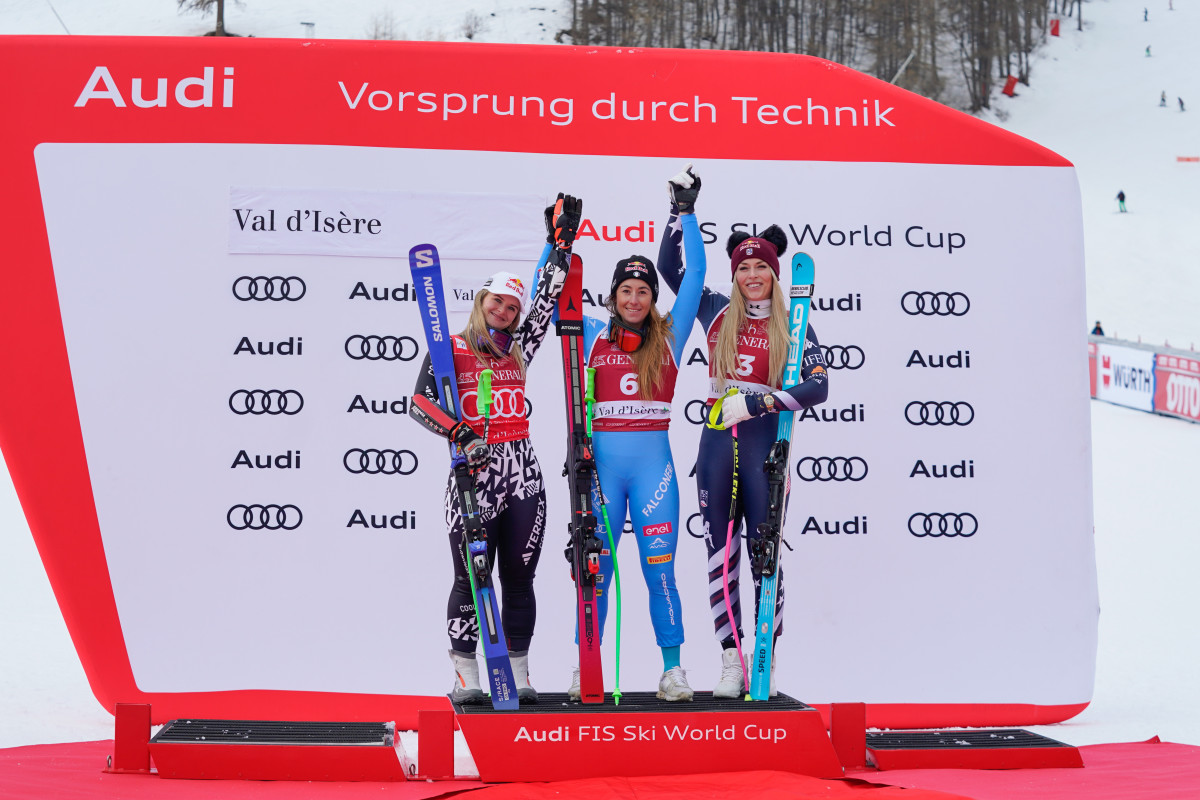
The Leki pole in question is hot pink and green and has a distinctive “L.V.” signature on the inside of the strap. One member of the set appeared to join Vonn recently on the podium in Val d’Isere, France.
Alice Robinson of Team New Zealand takes 2nd place, Sofia Goggia of Team Italy takes 1st place, Lindsey Vonn of Team United States takes 3rd place during the Audi FIS Alpine Ski World Cup Women’s Super G on December 21, 2025 in Val d’Isere, France.
Michel Cottin/Agence Zoom/Getty Images
One commenter, who perhaps doesn’t feel sentimental about their own gear, asked Vonn why she was intent on finding the missing pole. After all, the ski racer, who is a global superstar, shouldn’t have a problem finding new equipment. But some gear takes on a life of its own.
“They are 10 years old. They are special to me,” Vonn replied.
The search for the pole comes amid Vonn’s surprising and unprecedented ski racing comeback.
In 2019, she retired from ski racing after a standout career. Then, last winter, at age 40, she returned to the course. Her season ended in Sun Valley, Idaho, where she placed second in the super-G, becoming the oldest woman to stand on a FIS Alpine World Cup podium. It was her first time cracking the top three in the World Cup that winter.
More success followed this season, where, after competing in six events, Vonn claimed five podiums. Her worst result so far is a fourth-place finish.
Vonn has officially qualified for the Olympics and appears poised to be a medal favorite when the Winter Games kick off early next month.
Will finding her missing pole help her reach that goal? Hard to say, but it probably wouldn’t hurt.
Related: FPV Drones Have Changed Skiing—Meet The Best Pilot In The World
If you purchase an independently reviewed product or service through a link on our website, Variety may receive an affiliate commission.
This morning, the NFL announced the return of “Origins: An NFL Collection” for Super Bowl LX, featuring designs from Bay Area brands Aaron De La Cruz, BLVCK SCVLE and Nostalgia. The exclusive capsule showcases each designer’s interpretation of the Super Bowl through art and design while also capturing the eclectic essence of the San Francisco Bay Area — the home of this year’s Big Game.
“‘Origins: An NFL Collection’ is about creativity meeting community,” Ashley Daniel, director of consumer products at the NFL, said in a statement. “At Super Bowl LX, we are celebrating not only football but the stories, cultures and voices that define the San Francisco Bay Area. As we enter our fifth year of the program, this collection offers fans an opportunity to proudly showcase their pride for both the NFL and San Francisco, while being part of a bigger movement that is shaping the future of sports fashion.”
The NFL will debut the collection at a single-day pop-up event in San Francisco at The Pearl on Thursday, Feb. 5. Fans are invited to the free event to shop the limited-edition products and learn more about the participating brands. To register, visit NFL.com/origins. For fans outside the Bay Area, select styles from the collection will be available to shop online at NFLshop.com/origins beginning Feb. 6.
Preview a few standout pieces below:
Aaron De La Cruz White T-Shirt
Aaron De La Cruz Black Hoodie
Aaron De La Cruz is an acclaimed artist based in San Francisco, influenced by family, graffiti, skateboarding culture and architecture. He is celebrated for his innovative yet minimal approach to structure and form, and has earned global recognition in museums, private collections and large-scale public works.
BLVCK SCVLE Presidio Thermal
BLVCK SCVLE Golden Gate Crewneck
Founded in 2007, BLVCK SCVLE tells the story of how to decipher the world objectively through fashion. As a contemporary streetwear brand, it offers high-quality, timeless pieces that embody a mysterious aesthetic combined with dark romanticism.
Nostalgia is a culture-driven streetwear label founded in the San Francisco Bay Area by Humbert Lee and Jaden Yo-Eco. Their garments are designed to spark memories and are inspired by the past but made for today. Each piece bridges cultures, generations and personal histories.
The home of a Washington Post reporter was searched by the FBI as part of an investigation by the bureau into the leaking of classified documents tied to President Trump’s efforts to trim the size of the federal government. The search, which was first reported by The New York Times and the Post itself, came […]
Some two summers past, delighting in the prospect of a post-mountain bike ride beverage, I took a seat at a high top, and thought about beer as I absent-mindedly surveyed the brewery. But something immediately caught my eye. Double-taking, I noticed a young gentleman the table over wearing something that in years prior could have subjected him to outright scorn and ridicule in any ski town.
Loudly and brightly, the young fellow’s hat read the word “TELEMARK.”
It was both refreshing and stunning. He seemed quite unlike the graying gals and dudes (myself included) I knew who freed the heel on snow–and their inhibitions at Phish or Panic (but never, ever both). In fact he didn’t seem quite like anyone I recognized in the threadbare scene that had long struggled to entice a younger cohort.
His hat was stylish–of the flat brimmed, five-panel variety. And the gent was fresh-faced; his visage untouched by the march of time that adorns many a telemarker’s face, including my own–crow’s feet.
Someone young and trendy was indeed taking part in the ancient genuflecting turn, and openly declaring it.
Is telemark getting cool again? I thought.
Telemark skiing has indeed come a long way toward acceptability–even renewed respect–and all quite recently. Not long ago I, like many free-heelers of the fraught post-millenium era, was nudged toward eschewing outright free-heel pride. When asked the most classic of questions posed in a ski town when first meeting someone–if I skied or snowboarded–for the better part of a decade, I just said I skied, and left it at that.
The cultural landscape was then a minefield for the free-heeler. Friends willingly threw me under the bus at the opportunity to be in on a stranger’s telemark joke. Random alpine skiers on the same run as me seemed to constantly make a point to try and beat me to the bottom.Thus the modest, retrograde free-heel school of the 2010s I came from relegated the notion of wearing a hat declaring one TELEMARKs fraught at best.
But something has indeed changed lately.
Not only has the tele-scorn endemic of the previous generation seemed to abate over the last several years, the telemark scene itself–while still small and insular–appears poised to rise again out of the quiet self-loathing shadows and into a modern, even cool fold. Long ignored by the mainstream ski discourse, Instagram pages of outfits like TELE COLO and skiers Will Houskamp now showcase the leading edge of telemark–both in vibe and execution. Mainstream ski publications (like the one you’re reading) are even covering The Turn again. And with the ascendance of modern gear, the sport finally seems ready to shake the old refrain telemark is dead, a trope first uttered by retailers unable to sell through their free-heel inventory during the sport’s doldrums some twenty years ago. Since then Scarpa has released their long-awaited line of modern telemark boots, pointing to a renewed demand for new telemark gear. Even ATK, the darling of the freetour alpine touring scene, has announced a telemark binding is in the works. The sport seems to be becoming not only a viable business case, but maybe–maybe–even trendy again.
But as telemark appears to be riding a fresh and chic wave, a fitfulness has marked its evolution. Often sarcastic, self-referential, and stylishly self-effacing, the coalescing telemark newschool has brought the modern free-heel vibe to a new generation plugged into both social media and a more ironic sensibility, creating an energy not seen in telemark in years. But the new movement has also been party to a muted yet present divisiveness. At times criticized for neglecting those who blazed the trail ahead of them, the new guard has in turn stood their ground, occasionally scorning a portion of the telemark scene they deem counterrevolutionary to their movement; a cohort they deride as aged, curmudgeonly, cheap, and unwilling to abdicate.
Regardless, telemark has reawakened, most evidently in this rising new school that has unavoidably been influenced by the late-coming ascendance of a modern telemark gear paradigm.
This revitalized gear landscape sprouted from seeds sown decades before. First brought to life in 2007, the sport’s modern binding platform–the new telemark norm (NTN)–was conceived of as an upgrade to telemark’s eminently skiable but feature-starved binding template; the 75mm wide Nordic norm. NTN allowed not only a stronger edging ability from its underfoot connection, the new platform allowed myriad options that before only alpine skiers had enjoyed. Thos included ski brakes, step-in functionality, release, and the eventual incorporation of the pinnacle of turn-earning features: the tech-toe.
Telemark skiers took their time coming around to the new norm with many 75mm holdouts claiming NTN poorly mimicked the soulful sensation they had long found in duckbilled boots and Nordic norm bindings. While many still feel the elder platform is ascendant for making turns, eventually bindings like 22 Designs’ Outlaw X–the world’s best-selling NTN model–became the choice of many free-heelers, including a younger, hard-skiing subset. The new bindings helped usher in not only a modern gear paradigm, but also a new world view on telemark. Its forgoing of 75mm dogma–often typecast as not just a devotion to a certain binding but also to jambands and a hippie sesnsiblity–influenced a progressive if at times iconoclastic approach that many younger skiers would pick up on via social media. They took to the park and big mountain settings on the aggressive-skiing new telemark norm. In that process, the 75mm holdouts–often cast as luddites–would become the foil against which the new school would define itself.
“When you go on the forums there’s all these old crotchety dudes who are like ‘75 is the answer’ or ‘I’m only skiing leathers, and blah blah blah blah blah,’” Adam X Sauerwein, amongst the most influential voices in modern telemark media claimed on his Pursuit podcast in September of 2022. “I think telemark skiers are killing their own sports by being crunchy, crotchety old weird, young weird guys, girls, however you identify; you’re all telemark skiers, and you don’t spend enough money on your own sport ” he opined.
Regardless of this schism, the new equipment landscape has finally overtaken the old–and as other innovative binding platforms like the two-pin telemark tech system (TTS) have joined the fray–sales of new telemark equipment have slowly eclipsed the old norm, finally allowing eminent bootmaker Scarpa to come to market with the sport’s first fully modern, AT-comparable telemark boot–a revamped TX Pro. This, and the release of a retooled TX Comp–marks not only the first major update to telemark footwear in nearly two decades, but the ascendance of a modern telemark movement–complete in both gear and culture.
Like it ever has, telemark moves forward influenced by that duo of factors: equipment innovation and subcultural evolution. While these seemingly unrelated forces can appear to have little in common, they have together been integral to telemark’s cycles of popularity and obscurity.
Much like Scarpa’s introduction of the Terminator in 1993–the original plastic telemark boot–gear innovation has been key to driving telemark commerce, perhaps even participation and in turn further gear development, ever framing the ebbs and flows of the subculture. And while the current free-heel milieu little resembles that of the early nineties, manufacturers in the ski industry still see gear progress as integral to building sales.
“The big leaps in sales numbers really–I’m going to start with that because I think participation is a different number. Sales are really lifted by new, innovative product,” says Scarpa North America CEO Miller. “And you could go down the list of where something–a big change, not just a brand but a trend; shaped skis, alpine touring features in alpine boots. I use those as two somewhat recent changes. They really helped spike sales in those categories because there was something new to talk about.”
Miller and Scarpa hope telemark sales are ready to spike in similar fashion on the back of new, modern gear options. And the building scene seems poised to jump at the opportunity, with the new TX Pro selling out last year in its first season of availability.
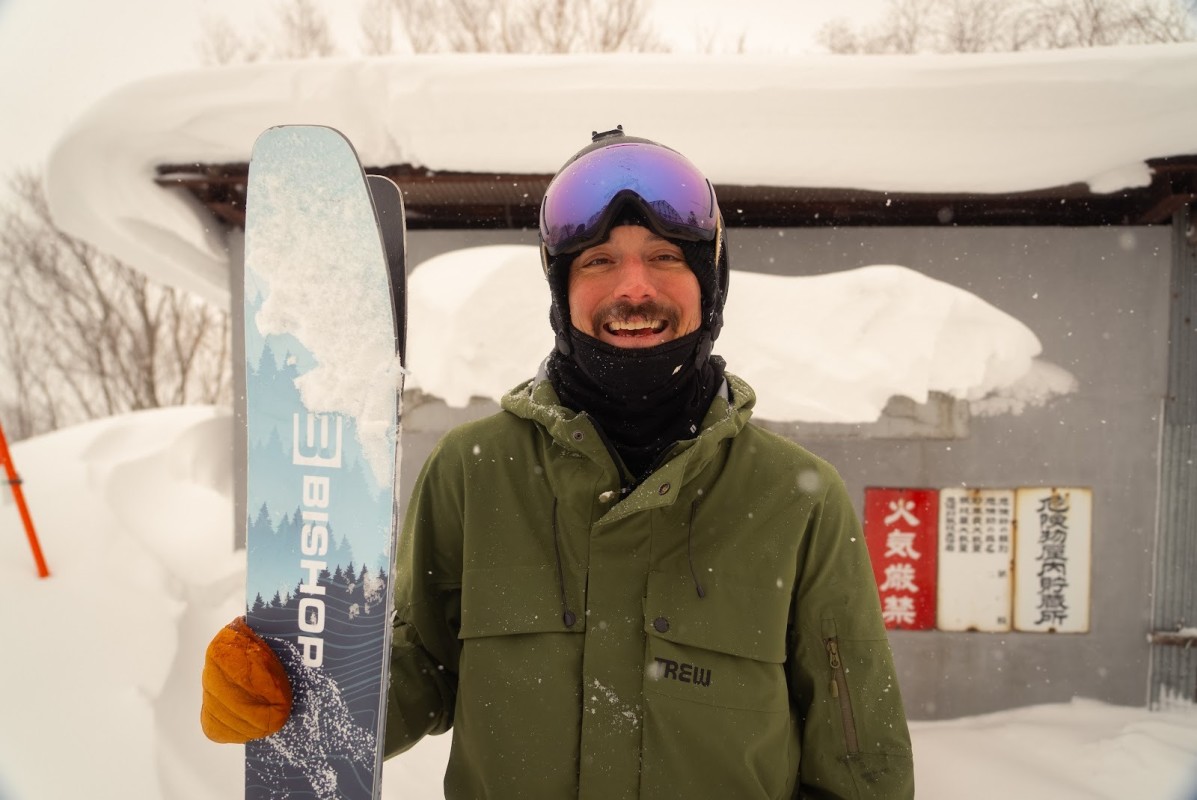
Other telemark makers also see the scene evolving, in no small part because of the gear landscape. That includes Bishop Telemark–the Edwards, Colorado-based boutique free-heel brand that has long enjoyed a cult following for their modern, aggressive bindings.
Matt Share, until recently the company’s sales and marketing manager, sees a distinct free-heel newschool evolving. A forward-thinking veteran of the software services industry, Share’s scant few years of exposure to the sport brought a fresh perspective to Bishop, a firm that sees the new gear paradigm and evolving subculture as inextricably linked.
“Being the newbie and getting the lay of the land I’d say I’m not bogged down by the history and past-protection and all that stuff,” Share says. “It seems like it’s still graduating from the old school to the new school, empowered by the tech, right? The tech now has changed the sport where you really can do everything that you can do on alpine or maybe more,” he continues, hinting at the newschool’s desire for telemark to evolve into something less esoteric, something more relatable, and–for the retailers and manufacturers–something more marketable.
Share’s perspective encapsulates a telemark world that is not only finally trending younger, but seems unencumbered by a deference to the sport’s history–telemark’s scant record often leaving that narrative struggling for modern acknowledgement. But that gap has little deterred–perhaps even aided–the ascendance telemark’s fresher vibe amongst a younger cohort.
“I think that’s why the new generation is drawn to it–there’s the style of it, it’s cool and different,” Share says. “The new generation is unlocking a new and different style.”
But a previous generation was also drawn to telemark, themselves taking to a freeride-ethos on an older gear paradigm, but one that was itself revolutionary.
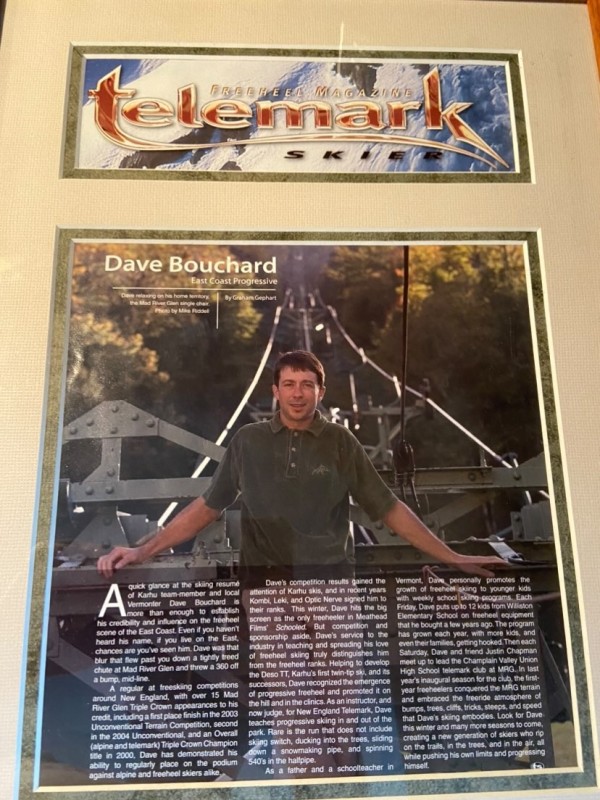
“Plastic boots and Cobra bindings were a pretty powerful combo,” says Dave Bouchard, who was amongst a cadre of hard skiing telemark skiers of the pre and post Y2K era who helped change the sport from what was long perceived as a mellow, overland practice to one more aggressive and brash. “Once on that gear I was feeling I could ski as well as I could on my alpine gear if not better–at least more graceful and fluid.”
And twenty-five years ago this group took on a forward-thinking if haughty ethos–not unlike the current newschool. “This was the early 2000s. This was about the time I started to feel it was my mission to show the world that tele skiers weren’t just a bunch of leather-boot, stinky granola-eating hippies,” Bouchard remembers.
It was in this milieu that telemark took off. Outfits like Josh Madsen’s Lipstick Films and Noah Howell’s Powderwhore Productions toured the country, driving stoke. The scene exploded with participants, leading to gear production of the likes the sport had never seen before and hasn’t seen since. And skiers like Nick Devore and Ben Dolenc–the latter of whom was sponsored by Nike–were hitting big airs, sliding rails, and leading a brash new vibe on the latest plastic boots and stouter 75mm bindings.
Bouchard profiled in Telemark Skier Magazine during free-heel’s rise in the aughts.
Perhaps illustrating the sport’s current growing pains, Matt Share and owner Dave Bombard note that many people still arrive at Bishop demo days with their old 75mm bindings, showing perhaps that while a loud and retail-minded subset pushes the new vibe, many still quietly embody the elder free-heel ethos; the push-pull of the future and the past being ever present in telemark’s evolution.
Regardless, Bishop Telemark has marketed their gear toward the newschool, aligning itself strongly with the movement–a scene anchored heavily by TELE COLO, a modern, movie-making, Instagrammable telemark outfit. No other group has so epitomized the newschool telemark movement and its style. Or been as visible. Many have thus gravitated to TELE COLO and its founder CJ Coccia, pointing to his films, tours, and social media as the zenith of the current telemark culture.
Not unlike the earlier modern telemark movement, amongst Coccia’s chief aims is to shake telemark from the perception that it belongs to a previous generation and reframe it as progressive, fun, and stylish. In a plug for their 2023 film THIS IS TELEMARK, what marked their first full-length feature, TELE COLO brand manager Giorgia Menetre wrote in SKI that “the perception of telemark skiing remains aged–with floppy bindings, granola diets, unkept beards, and smells of patchouli. TELE COLO is here to present the ski world with the new age of telemark culture that exists beyond the stereotype.”
Coccia echoes this, describing his modern telemark edits as aiming “to give people an understanding of kind of the differences in telemark and what sort of personalities exist versus allowing people from the outside to kind of assume that it’s an older collective of people, or people that have turned into dads or moms and they want to be interested on greens while they teach their kids again, or people that are on a granola diet and listen to Grateful Dead.”
While some jest is certainly at play in Coccia’s approach to the old guard, a kernel of truth also seems to be operative. “I say all this stuff jokingly,” Coccia says, “but also it comes from a place where I do think–weirdly enough–some people on the outside assume that telemark is a very aged thing and there’s not really a quote-unquote newschool or newer population that’s becoming interested in it.”
Tele Colo creator CJ Coccia.
A tension has arisen at this interface between the old guard and the new school in telemark. And TELE COLO’s branding often plays into the schism. Though on the surface facetious and playful, their athlete bios, magazine interviews, and more seem to unavoidably mention the segment of telemark that they do not align with–a telemark cohort they point out as aged, new gear averse, and one that has occasionally been critical of the modern telemark newschool.
In the self-referential first edition of the TELE COLO magazine, released in the fall of 2023, team athlete Greg Yearsley was asked if he had to pick a fight with telemark, what would it be over. And he redrew the line in the sand. “It always blows my mind when people get their Targas in a twist over what other people are doing,” Yearsley said, referring to the G3 Targa, a binding long used by many telemark skiers of the previous generation, and that has become a symbol of a bygone era.
Whether as action or reaction, some figures prominent in telemark’s past have taken issue with what they feel is the newschool’s implied assertion that they are the first to tread this path, with many noting a similar newschool telemark scene first existed several decades ago.
Josh Madsen, arguably once the leading voice in all of telemark, himself took exception to Menetre’s piece in SKI via his once weekly podcast. “What this doesn’t do is act like all of this stuff existed beforehand. Because it did,” Madsen said forcefully. “It literally sounds like something from 25 years ago where it’s like ‘we’re fighting the hippies man, screw the hippies! And all the granola eating people, and let’s make cool, rad stuff.’ I mean, that’s like my era.”
Though many found much of the episode to be self-serving and antagonistic–and Madsen never recovered from that reaction, since fading from view and closing his iconic telemark-specific ski shop–the former filmmaker and newschool skier of the previous generation has been echoed by others.
In an Instagram comment regarding an article about TELE COLO’s 2024 film tour (written by the author of this piece), Dave Bouchard–himself a member of that original newschool who organized extreme skiing and park competitions for the New England Telemark club in the 2000s–noted “these guys [TELE COLO] are doing great stuff. I don’t wanna take anything away from them, but this stuff was going on in the 2000s. New England Telemark was putting on park and pipe contests and offering $3000 prizes. I had guys like Madsen…flying into New England to compete because no one else was doing anything close for telemark skiing.”
Feeling handcuffed by the expectations that they defer to the old guard, feeling its ubiquity stifling, newschool athletes and figures have often been quick to react to these comments, most typically TELE COLO athlete Greg Yearsley. In response to Bouchard’s comment, Yearsley retorted: “can one thing be posted about [TELE COLO] without someone bringing up the 2000 tele scene? Getting real old. Do we need to have the history of telemark added to every video?”
Coccia himself feels this clash has become pervasive in telemark. “It’s a very real aspect of what’s going on. You don’t really have to be in tele all that long or at all to see that friction,” he says.
“Whether it’s prompted by events that are happening, or tricks that are happening, or the gear that’s happening, those seem to be kind of the topics of friction that tends to happen on these forums and Instagram and shit.”
Much like the wider modern world, the internet has become not only the chief conduit of the telemark subculture, but also its chosen battleground, where debates over preferred gear, technique, and even approach have framed the modern discussion on the sport.
“There are repeat offenders,” says Coccia of the often anonymous online profiles who purposefully strike a counterpoint to the telemark newschool.
“But somehow you’ll see a new person that repeats the same theme, too. So you kind of wonder; is it really just like three or four people or is it a shared ideology or kind of resistance against whatever you want to call telemark at this point in time,” he wonders.
Though newschool figures often mirror Coccia and respond in measured tones, a darker underbelly to the dialogue has also emerged, where a collective defense of the modern newschool has at times been adversarial, even bullying, best exemplified by the Instagram account @freeheelwaifu–an anonymous, since deleted handle created to bash Madsen in the wake of his controversial podcast.
The account’s posts–some of which used suicidal symbolism to smear Madsen–were liked by many figures central to the newschool telemark movement, further cementing the polarized internet dialogue on free-heel skiing.
A screen grab from the since deleted freeheelwaifu Instagram account.
Fitful or not, something has indeed changed in telemark. Amidst a gear revolution that has brought the sport into the modern fold, a contemporary interpretation of the free-heel method has emerged from a nascent newschool. But while the sport now enjoys a certain cachet amongst a younger and trendier cohort, the new school and the old guard are often strange bedfellows. While more often than not the two groups are merely stereotypes, they nonetheless represent opposing notions.
How much that plays out in truly human interactions is an open question. While the newschool seems to feel the need to claim the ground they stand on, and some of the old guard appear bent on receiving a toll of respect for what they did first, much of it seems isolated to the wilds of the internet and the origin story and branding of the new wave; newschool skiing having always positioned itself as the antidote to a staid status quo. Between people, telemark may well be more harmonious than it appears.
But this online discourse now frames the telemark experience–and is widely consumed. And after years of rampant fears that free-heel gear would become more and more unavailable, and that telemark could indeed die, the existential tension surrounding the sport’s future has been replaced with an internal friction that may not embody the entire telemark experience, but is nonetheless ever-present.
Still, it seems telemark is having a moment. At last a younger generation–using the tools at their fingertips in social media–has not just joined the elder cadre that kept the flame alive through a fraught few decades; they have injected the sport with a fresh energy that has buoyed the scene and its commerce. And that has not gone unnoticed by the old guard.
“I’ve got nothing against the new crop of tele skiers, I love that they are keeping the turn alive,” says Dave Bouchard. “The turn and the fun of the turn is what has created a subcategory of skiing that lives on.”
Still, even when concluding in positive terms, a certain contrast remains. “From what I’ve seen from the TELE COLO crew is they want to have fun with the turn. But there’s nothing I’ve seen on TELE COLO social media that I haven’t seen in the last 20 years prior except for maybe gear. People still are out there getting after it and sharing the love of the turn,” Bouchard says.