Selecting the right flooring for an indoor basketball court is critical to ensuring optimal performance, player safety, and long-term durability. Whether you’re a facility manager, coach, or homeowner building a home court, the choice between wood and synthetic flooring can significantly impact your court’s functionality and maintenance requirements. Both options offer distinct advantages and trade-offs in terms of performance, cost, and upkeep.
This guide provides a comprehensive comparison of wood and synthetic basketball flooring, examining their characteristics, benefits, and limitations. By understanding the technical aspects of each material, you can make an informed decision that aligns with your budget, maintenance capacity, and performance expectations.
Wood Flooring for Indoor Basketball Courts
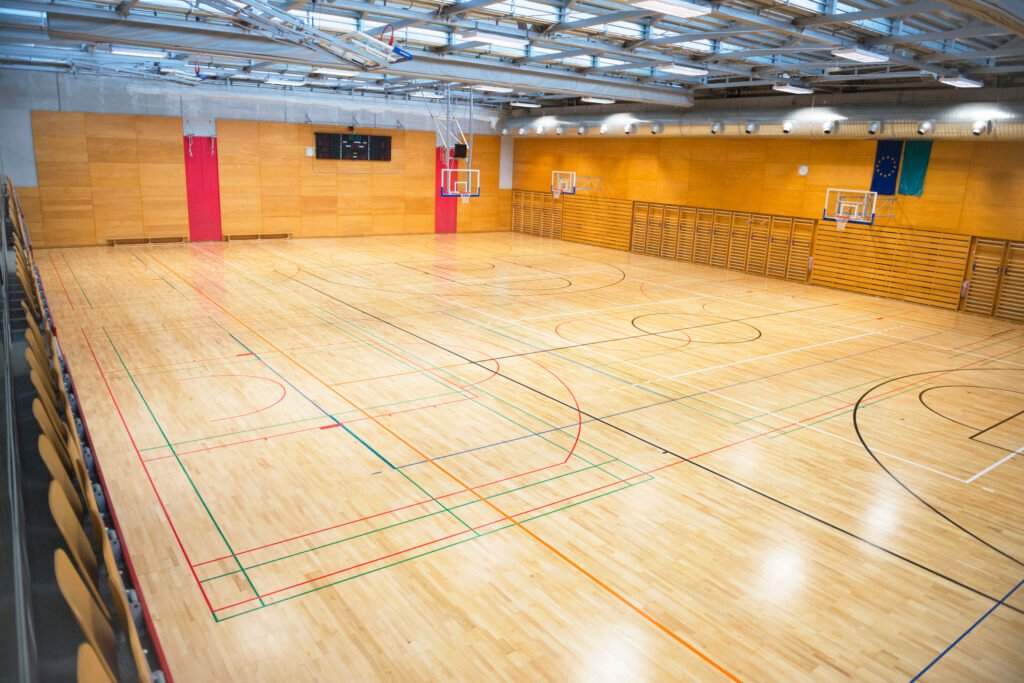
Wood flooring has long been the standard for professional and collegiate basketball courts. Its classic appearance and superior performance characteristics make it a preferred choice for competitive play.
Types of Wood Flooring
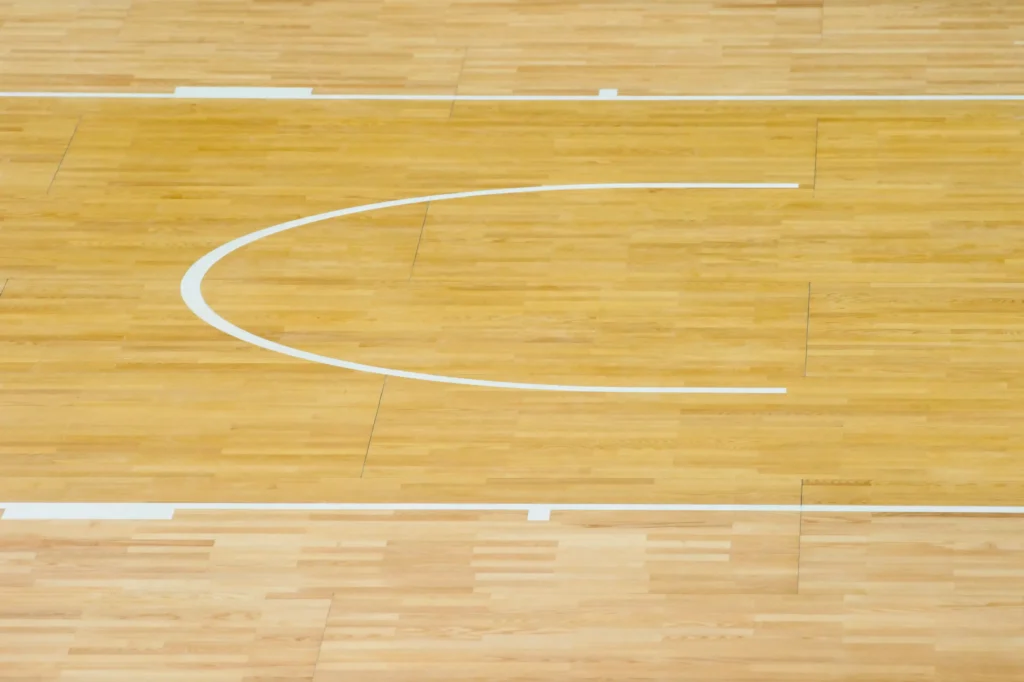
The most common wood species for basketball courts is hard maple, prized for its density, durability, and consistent grain pattern. Other options include beech and ash, though maple remains the industry standard due to its exceptional shock absorption properties and ability to withstand heavy use.
Professional installations typically feature tongue-and-groove planks mounted on a subfloor system with rubber pads or sleepers. This construction method creates the necessary cushioning and ball response that players expect from a high-quality court. Leading manufacturers such as Connor Sports Flooring and Robbins Sports Surfaces offer FIBA-certified hardwood systems designed for competitive play.
Advantages of Wood Basketball Flooring
Wood flooring delivers several performance benefits that contribute to its enduring popularity:
Superior Shock Absorption: Properly installed wood floors provide excellent impact absorption, reducing stress on players’ joints and minimizing injury risk during high-intensity play. The elasticity of maple combined with engineered subfloor systems creates optimal cushioning.
Consistent Ball Response: Wood surfaces offer predictable ball bounce and rebound characteristics essential for competitive basketball. Players can rely on consistent performance across the entire court surface.
Classic Aesthetic Appeal: The natural beauty and traditional appearance of wood flooring create a premium atmosphere that enhances any facility. The warm tones and grain patterns are synonymous with basketball excellence.
Long Lifespan: With proper maintenance, wood basketball courts can last 30 years or more. The surface can be sanded and refinished multiple times, extending its functional life significantly.
Disadvantages of Wood Basketball Flooring
Despite its advantages, wood flooring presents several challenges:
Higher Initial Investment: Wood basketball court installation requires significant upfront capital. Material costs, specialized installation, and subfloor system components make wood the more expensive option compared to synthetic alternatives.
Maintenance Requirements: Wood surfaces demand regular care to maintain their appearance and performance. Refinishing every 7-10 years is necessary, along with daily cleaning protocols.
Moisture Sensitivity: Wood flooring is susceptible to warping, cupping, and damage from moisture exposure. Facilities must maintain strict humidity control (35-50% relative humidity) to prevent structural issues.
Installation Complexity: Proper wood floor installation requires specialized expertise and precision. The process takes longer than synthetic flooring installation and must be performed by certified professionals.
Wood Flooring Maintenance Tips
To maximize the lifespan and performance of wood basketball flooring:
Regularly sweep or vacuum to remove dust and debris that can scratch the finish
Use a damp mop with a wood-specific cleaner to clean the surface, avoiding excess water that could penetrate the finish
Periodically refinish the surface (every 7-10 years) to maintain its appearance and performance characteristics
Control humidity levels between 35-50% to prevent warping or damage
Inspect for loose boards or finish deterioration and address issues promptly
Synthetic Flooring for Indoor Basketball Courts
Synthetic basketball flooring has gained popularity as a cost-effective alternative to wood, particularly for multi-purpose facilities, recreational centers, and budget-conscious installations.
Types of Synthetic Basketball Flooring
Two primary synthetic materials dominate the indoor basketball flooring market:
PVC (Polyvinyl Chloride): Roll-out or tile-format PVC flooring offers a resilient, cushioned surface with good traction. These systems typically feature a foam or rubber backing that provides shock absorption.
Polyurethane: Poured polyurethane surfaces create seamless courts with customizable cushioning levels. This option allows for precise performance tuning based on specific requirements.
TPE (Thermoplastic Elastomer): Advanced interlocking tiles made from soft-touch TPE material provide enhanced shock absorption compared to traditional PP (polypropylene) tiles. Mondo Sports Flooring offers FIBA-certified synthetic systems with superior joint protection and reduced injury risk.
Advantages of Synthetic Basketball Flooring
Synthetic flooring delivers practical benefits for many basketball facilities:
Lower Maintenance Requirements: Synthetic surfaces require minimal upkeep compared to wood. Daily sweeping and periodic mopping with neutral pH cleaners maintain surface cleanliness without refinishing needs.
Cost-Effectiveness: Initial installation costs for synthetic basketball flooring are typically 30-50% lower than wood systems. This makes synthetic options accessible for facilities with limited budgets.
Moisture Resistance: Synthetic materials are impervious to moisture damage, making them suitable for facilities where humidity control is challenging or where courts serve multiple purposes.
Quick Installation: Synthetic flooring systems install faster than wood, minimizing facility downtime. Some roll-out or interlocking tile systems can be installed in days rather than weeks.
Versatility: Synthetic surfaces adapt well to multi-purpose facilities where basketball shares space with other activities. The durability of synthetic materials withstands varied uses without degradation.
Disadvantages of Synthetic Basketball Flooring
Synthetic flooring presents certain limitations:
Reduced Shock Absorption: While modern synthetic systems offer adequate cushioning, they generally provide less shock absorption than properly installed wood floors. This can increase joint stress during prolonged play, though advanced TPE materials have significantly improved this aspect.
Less Premium Appearance: Synthetic surfaces lack the traditional aesthetic appeal of wood. For facilities prioritizing a classic basketball atmosphere, synthetic flooring may not achieve the desired visual impact.
Ball Response Differences: Synthetic surfaces can produce slightly different ball bounce characteristics compared to wood. Players accustomed to wood courts may notice subtle performance variations.
Limited Refinishing Options: Unlike wood, synthetic flooring cannot be refinished. When the surface wears out, complete replacement is necessary rather than restoration.
Synthetic Flooring Maintenance Tips
Proper care extends the life of synthetic basketball flooring:
Sweep or vacuum regularly to remove dirt and debris that can abrade the surface
Mop with a neutral pH cleaner to maintain cleanliness without damaging the material
Check for and repair any seams or damages promptly to prevent further deterioration
Avoid using abrasive cleaners or harsh chemicals that can degrade synthetic materials
Place protective mats at entrances to reduce tracked-in dirt and moisture
Wood vs. Synthetic: Comprehensive Comparison
Performance
Wood flooring maintains an advantage in shock absorption and ball response consistency, making it the preferred choice for competitive play. The natural elasticity of maple combined with engineered subfloor systems delivers superior joint protection and predictable ball behavior.
Synthetic flooring has closed the performance gap with advanced materials like TPE, offering adequate shock absorption for recreational and youth basketball. FIBA-certified synthetic systems meet international performance standards, though subtle differences remain compared to wood.
Cost Analysis
Initial Investment: Synthetic flooring costs 30-50% less than wood for materials and installation. A typical high school gymnasium wood floor might cost $80,000-$120,000, while a comparable synthetic system could range from $40,000-$70,000.
Long-Term Costs: Wood flooring requires periodic refinishing ($3-$5 per square foot every 7-10 years), adding to lifetime costs. Synthetic flooring has lower maintenance expenses but requires complete replacement after 10-15 years rather than refinishing.
Total Cost of Ownership: Over a 30-year period, wood flooring may prove more economical due to its extended lifespan with refinishing. Synthetic flooring requires 2-3 complete replacements in the same timeframe.
Maintenance Requirements
Wood flooring demands more intensive daily and periodic maintenance. Humidity control, refinishing schedules, and specialized cleaning protocols require dedicated facility management attention.
Synthetic flooring offers simplified maintenance with basic cleaning routines and no refinishing needs. This reduces labor requirements and makes synthetic options attractive for facilities with limited maintenance staff.
Durability and Lifespan
Properly maintained wood floors can last 30-50 years with multiple refinishing cycles. The solid hardwood construction withstands decades of use when properly cared for.
Synthetic flooring typically lasts 10-15 years before replacement becomes necessary. While durable during its service life, synthetic materials cannot be restored like wood when surface wear occurs.
Frequently Asked Questions
Which flooring type is better for competitive basketball?
Wood flooring remains the gold standard for competitive basketball due to its superior shock absorption, consistent ball response, and FIBA certification. Professional and collegiate programs overwhelmingly choose wood for these performance advantages.
Can synthetic flooring be used for tournament play?
Yes, FIBA-certified synthetic systems from manufacturers like Mondo Sports Flooring meet international standards for tournament play. However, preferences vary, and many competitive venues still favor wood for its traditional performance characteristics.
How do I decide between wood and synthetic flooring?
Consider your budget, maintenance capacity, and performance requirements. Facilities prioritizing elite performance and traditional aesthetics should invest in wood. Multi-purpose facilities with budget constraints may find synthetic flooring more practical while still meeting performance needs.
What is the expected lifespan of each flooring type?
Wood flooring lasts 30-50 years with proper maintenance and periodic refinishing. Synthetic flooring typically requires replacement after 10-15 years, depending on usage intensity and maintenance quality.
Are there hybrid options available?
Some manufacturers offer hybrid systems combining wood surfaces with synthetic backing layers. These systems attempt to balance wood’s performance characteristics with simplified installation, though they remain less common than pure wood or synthetic options.
Making the Right Choice for Your Facility
Both wood and synthetic flooring offer viable solutions for indoor basketball courts, each with distinct advantages suited to different needs and constraints.
Wood flooring excels in performance, shock absorption, and traditional aesthetic appeal. It represents the premium choice for facilities prioritizing competitive play, player safety, and long-term investment. The higher initial cost and maintenance requirements are offset by superior performance characteristics and extended lifespan with proper care. Brands like Connor Sports Flooring and Robbins Sports Surfaces provide FIBA-certified systems engineered for professional-level play.
Synthetic flooring delivers cost-effectiveness, low maintenance, and versatility for multi-purpose facilities. Advanced materials like TPE have significantly improved shock absorption and safety features, making synthetic options increasingly competitive for recreational and youth basketball. Mondo Sports Flooring offers FIBA-certified synthetic systems that balance performance with practical benefits.
Your decision should reflect your facility’s specific requirements: budget constraints, maintenance capacity, intended use level, and performance expectations. Competitive venues benefit from wood’s superior characteristics, while recreational facilities may find synthetic flooring more practical and economical.
Ready to install the perfect basketball flooring for your facility? Contact us for a consultation with our flooring specialists. We’ll assess your specific needs, space requirements, and budget to recommend the optimal solution for your indoor basketball court.
Every year on November 5, the world comes together to observe World Tsunami Awareness Day, a reminder that awareness can save lives. Tsunamis, often triggered by undersea earthquakes or volcanic eruptions, strike with little warning but with devastating force. While we cannot prevent them, we can prepare for them and that preparation can make all the difference.
This day was established by the United Nations in 2015, inspired by Japan’s long history of disaster management and its traditional concept of “Inamura-no-hi,” the story of a farmer who set fire to his rice sheaves to warn villagers of an incoming tsunami. His quick thinking saved hundreds of lives and today, that act symbolizes the power of awareness, education and timely action.
Tsunamis are rare, but their impact is massive. The 2004 Indian Ocean Tsunami stands as one of the deadliest natural disasters in history, claiming over 230,000 lives across 14 countries. That tragedy taught us an unforgettable lesson: early warning systems, community drills and education are not optional, they are essential.
The theme for World Tsunami Awareness Day 2025 continues to emphasize the importance of building resilient communities and reducing disaster risk. Governments, organizations and individuals all share a role in this mission. Schools can organize awareness sessions, youth groups can lead mock drills, media can spread accurate information, each small effort adds up to a stronger line of defense.
But awareness should not end on a single day. It should become a part of our collective mindset to understand the signs, know the escape routes and stay calm in crisis. Preparedness is not fear, it is empowerment.
Let’s use this day as more than a remembrance, let it be a call to action. Together, through awareness and unity, we can ensure that the waves of destruction become waves of resilience and hope.
Siapa sih yang nggak pengen ngerasain sensasi menang besar tanpa harus keluar banyak modal? Nah, kabar baik buat kamu: ada beberapa slot gacor hari ini yang bisa dimainkan tanpa modal besar, tapi peluang menangnya tetap tinggi!
Dengan pilihan game yang tepat, kamu bisa menikmati keseruan spin, bonus melimpah, dan fitur scatter yang sering banget muncul — bahkan cuma dengan taruhan kecil.
1. Apa Itu Slot Gacor?
Slot “gacor” adalah istilah yang sering dipakai pemain untuk menggambarkan game slot yang lagi mudah menang. Biasanya, slot seperti ini punya:
Frekuensi kemenangan yang tinggi (sering muncul kombinasi menang)
Fitur bonus aktif (seperti Free Spin atau Wild beruntun)
RTP (Return to Player) tinggi, biasanya di atas 96%
Jadi, slot gacor bukan cuma soal keberuntungan, tapi juga tentang memilih game yang tepat di waktu yang pas.
2. Daftar Slot Gacor Hari Ini yang Wajib Dicoba
Berikut beberapa game slot paling gacor hari ini yang terkenal mudah kasih bonus besar tanpa perlu taruhan tinggi:
🎰 Starlight Princess (Pragmatic Play) Game dengan RTP tinggi dan fitur pengali (multiplier) besar yang bisa muncul kapan aja.
💎 Gates of Olympus (Pragmatic Play) Slot legendaris dengan sistem “tumble” dan scatter gampang muncul. Banyak pemain bilang ini game sejuta cuan!
🐉 Dragon Hatch (PG Soft) Game dengan tema naga dan fitur bertingkat, cocok buat pemain yang suka tantangan tapi tetap hemat modal.
🧙♂️ Magic Crystals (PG Soft) Tampilan grafis memukau, plus peluang scatter-nya cukup tinggi — cocok buat yang suka sensasi free spin beruntun.
3. Tips Bermain Slot Tanpa Modal Besar
Biar peluang menang makin tinggi, coba beberapa tips berikut:
Main di slot demo dulu buat belajar pola dan fitur game
Gunakan taruhan kecil tapi rutin supaya saldo tahan lama
Pilih game dengan RTP tinggi dan volatilitas menengah
Manfaatkan promo dan bonus free spin kalau tersedia
Dengan strategi ini, kamu bisa tetap main santai tapi peluang menangnya tetap besar.
4. Cocok Buat Pemain Pemula
Buat kamu yang baru mau mulai main slot online, nggak perlu khawatir. Slot-slot di atas punya mekanisme sederhana dan visual menarik, jadi mudah dipahami. Apalagi kalau kamu main versi demo gratis, kamu bisa latihan dulu tanpa risiko rugi.
Kesimpulan
Slot gacor hari ini bukan cuma soal keberuntungan, tapi juga tentang memilih game yang tepat dan bermain cerdas. Dengan modal kecil pun, kamu tetap bisa ngerasain keseruan spin, bonus melimpah, dan potensi maxwin yang nggak kalah dari pemain besar.
Kalau kamu lagi cari slot seru tanpa modal besar, cobain deh rekomendasi di atas — siapa tahu hari ini giliran kamu yang jackpot! Agen234
Pickleball is more than just a trend. It is one of the fastest-growing sports around the world, loved by kids, adults, and seniors alike. With that growth comes a big question for many players, schools, clubs, and homeowners: What kind of surface should I use for my pickleball court?
Choosing the right outdoor flooring can affect everything from how the ball bounces to how your knees feel after a few hours of play. It also impacts how long your court lasts and how much time you’ll spend maintaining it.
So, what’s the best outdoor flooring material for a pickleball court? Let’s break down the top five options and help you figure out which one is right for your space and your style of play.
Why Outdoor Flooring Is a Game-Changer for Pickleball Courts
Outdoor pickleball courts face challenges that indoor ones do not. Rain, heat, cold, and constant sunlight can wear down surfaces quickly. That is why choosing the right outdoor flooring is so important. It is not just about how it looks. It is about how it performs under pressure.
The surface of your court affects player safety, game quality, and long-term durability. If the flooring is too hard, it can cause injuries. If it is too soft or uneven, it affects the ball’s bounce and speed. That is why every court owner or builder should take time to explore their options before making a decision.
Ready to explore your choices? Let’s start with one of the most popular and modern solutions.
1. Modular Court Tiles: The Most Versatile Outdoor Flooring Option
Modular court tiles are a favorite among many pickleball players and facility owners. These are interlocking tiles made from strong plastic materials like polypropylene. They can be installed over concrete or asphalt and are built to last.
Benefits of Modular Tiles
Modular tiles are known for their quick installation. You do not need to wait days or weeks for surfaces to dry or cure. Once your base is level, the tiles snap together, and you are ready to play.
They are also great in all weather conditions. The tiny perforations in the design let water drain through, so puddles do not slow you down after rain. They are UV-stable, meaning the color stays bright and fresh even after years in the sun.
Another key benefit is player safety. These tiles provide shock absorption, which means less stress on knees and joints. That is important for older players or anyone playing regularly.
Where They Work Best
Modular tiles are perfect for both professional and backyard courts. They are popular in schools, sports clubs, community centers, and even private homes. If you want a fast, clean, and low-maintenance option, this could be the best outdoor flooring for your pickleball court.
Companies like VMKON offer specialized modular court tiles designed just for pickleball. They are built for traction, ball bounce, and long-term use—perfect for anyone looking to install a quality court.
But what if you prefer something a little more traditional?
2. Acrylic-Coated Surfaces: The Classic Court Look
When most people picture a tennis or pickleball court, they imagine a smooth, painted surface in green or blue. That surface is usually acrylic. Acrylic coatings are applied over asphalt or concrete to create a clean and professional look.
Performance and Durability
Acrylic surfaces offer great ball bounce and consistent speed, which is why they are used in many tournament-level courts. They are also customizable. You can adjust the texture and choose the exact color you want for your court.
However, these surfaces can be a bit more fragile than they look. Cracks may appear over time due to shifting weather or poor base preparation. Repairs can be pricey, and recoating is needed every few years to keep the court looking and playing its best.
Maintenance Considerations
Maintenance is key for acrylic courts. Regular cleaning and checking for cracks or fading are important. You also need a well-prepared base. If the concrete or asphalt underneath is uneven, the acrylic may wear out faster.
So, while this type of outdoor flooring is great for performance and looks, it does require care and regular upkeep.
Looking for something simpler and more budget-friendly? Let’s talk about asphalt.
3. Asphalt: Budget-Friendly Outdoor Flooring
Asphalt is one of the most affordable base materials used in outdoor sports courts. It is commonly used for basketball and tennis courts, and it is also used for pickleball.
Pros and Cons
The main benefit of asphalt is its price. It is cheap, easy to install, and covers large areas quickly. You can play on it as-is or add a surface like acrylic or tiles on top.
However, asphalt alone is not ideal for long-term pickleball play. It is a hard surface with little to no shock absorption. This can be tough on players’ joints. It also wears down over time, especially in areas with heavy rain, snow, or sun.
Best Use Cases
Asphalt works well for community or recreational courts that see a lot of use. If you’re working with a limited budget and need a court that gets the job done, asphalt is a good starting point.
But if you want a surface that lasts longer or feels better underfoot, you might want to explore other outdoor flooring options.
That brings us to another solid choice: concrete.
4. Concrete: Solid Foundation for Long-Term Use
Concrete is a strong and long-lasting material that is often used as a base for other types of court surfaces. But it can also be used on its own as a playing surface.
Ideal for Permanent Setups
If you are building a court that you want to last 20 years or more, concrete is a strong candidate. It is extremely stable and can handle heavy use.
You can leave it bare or add a surface coating like acrylic or tiles. It’s also a great base for modular court tiles, especially in areas where the weather can cause shifting ground.
Considerations for Playability
Concrete is hard, which means it offers little shock absorption. That can be a problem for players who are on the court often or who have joint concerns.
For the best results, concrete should be paired with a surface that adds comfort and playability—something like modular tiles. That combination gives you both strength and a better playing experience.
Not a fan of hard surfaces? Some people explore turf next.
5. Artificial Turf: A Soft but Unconventional Outdoor Flooring Choice
Artificial turf is not very common for pickleball, but it does show up in some backyard courts and multi-sport areas. It looks nice and feels soft underfoot, but it comes with trade-offs.
Comfort vs. Competition Standards
Turf is gentle on the knees and easy to stand on for long periods. However, it is not ideal for serious play. The ball does not bounce well, and movement can feel slower.
Also, turf gets hot in summer and may not offer the grip needed for fast, competitive matches. It is better for fun, casual games in backyards or community centers where multiple sports are played.
Is It Right for Pickleball?
If comfort is your top priority, and you are not worried about official court standards, turf may be worth considering. But if you’re planning to host games, tournaments, or train seriously, other outdoor flooring options will serve you better.
So with all these choices, how do you know which one is best for you?
So… Which Outdoor Flooring Option Is Right for You?
Each material we’ve covered has its strengths. If you are on a tight budget and just need a simple court, asphalt might work. If you are looking for a clean, professional court and do not mind maintenance, acrylic could be your match.
But if you want long-term durability, easy installation, low maintenance, and player-friendly features, modular court tiles are often the top choice. Especially for clubs, schools, and homes, they offer a mix of performance and practicality.
Still deciding? Let’s take a closer look at one solution that checks all the boxes.
Why VMKON’s Outdoor Flooring Tiles Stand Out
VMKON designs and manufactures advanced modular court tiles that are built specifically for pickleball and other outdoor sports. These tiles are not just tough—they are smart.
They include shock absorption technology, anti-slip texture, fast drainage, and UV resistance. They are also easy to install, whether you’re a contractor or a DIYer.
Schools, recreation centers, and private homeowners across the globe choose VMKON tiles because they offer reliable performance without the hassle. You don’t need to resurface them every few years, and they hold up in hot, cold, wet, or dry conditions.
For anyone building a court that will be used often, in all seasons, this type of outdoor flooring can make a big difference.
Conclusion
Whether you’re building a community court, upgrading your facility, or finally installing that backyard dream court, choosing the right outdoor flooring is one of the most important decisions you’ll make.
We hope this guide helped you understand your options, weigh the pros and cons, and feel more confident in making your choice.
If modular tiles sound like the right fit—or if you just want expert advice—reach out to us at VMKON. Our team is happy to help you find the perfect outdoor court solution, whether you’re starting from scratch or upgrading an existing space.
“When truth becomes dangerous, telling it becomes an act of courage.”
Every year on November 2, the world observes the International Day to End Impunity for Crimes Against Journalists a reminder of the brave men and women who risk their lives to bring truth to light.
Journalists are the eyes and ears of society. They uncover corruption, reveal injustice, and give a voice to those who cannot speak for themselves. Yet, in many parts of the world, telling the truth can cost them their freedom or even their lives. According to UNESCO, more than 1,500 journalists have been killed over the last two decades, and in almost 90% of these cases, the killers were never punished.
This silence of justice is what we call impunity and it threatens not only journalists but also democracy itself. When crimes against journalists go unpunished, fear replaces freedom, and misinformation fills the space where truth once stood.
The United Nations declared this day in 2013, following the murder of two French journalists in Mali, to demand accountability and safety for media workers worldwide. It urges governments to strengthen legal systems, ensure proper investigations, and protect journalists from threats and harassment.
Ending impunity is not just about defending journalists, it’s about defending our right to know the truth. A free and safe press means a stronger, fairer, and more transparent society.
Let us remember today, when a journalist is silenced, an entire society loses its voice. Justice for journalists is justice for all.
In celebration of Reading Month, we sat down with Senali Senanayake, a passionate book lover who shares her world of books with a growing Instagram audience. She gave us an insightful peek into her journey as a reader, and the books that have truly made a spark in her life.
Q: Could you start by introducing yourself and telling us how you first got interested in reading?
A: I’m Senali, a third-year economics undergraduate at University of Colombo. My love for reading started as early as I can remember because I was fascinated by the beautiful picture books my older siblings had. This early curiosity was really nurtured by my family. Especially, my maternal aunt, who is an avid reader, used to buy me books, and my mom often used them as a reward for my academic achievements. The big step was when my grandpa would take me to the public library every Tuesday, where I’d borrow two books to finish by the next week.
Q: What was the first book or author that made you fall in love with reading?
A: I’ve read many books since I was a kid, but two key authors truly solidified my love for reading. The first is the Sri Lankan author Janaki Sooriyarachchi, who has written amazing colorful books for children. The second is the iconic Enid Blyton. I was about eight when my aunt gifted me a Secret Seven book, and that single gift led me to read most of her wonderful series, including Famous Five and Mallory Towers.
Q: How often do you usually read, and do you follow a specific reading routine?
A: I’m what you call a mood reader, so I read whenever I feel like reading. Sometimes, because of my academic work, I can unfortunately go weeks without reading at all. But when I really get into a book, I won’t put it down until I’m finished. Mostly, I find time to read at night or during the weekend, but I definitely don’t follow a specific routine.
Q: Which genres do you enjoy the most, and what attracts you to them?
A: I mostly read classics, contemporary fiction, rom-com, and fantasy. Since I study social sciences, I’m very curious about human behavior, and those genres always help me literally step into other people’s shoes to understand them better. I think these genres also stimulate my creativity because I build up the entire story as a movie in my mind. That personal, imaginative experience is why I usually pick these kinds of books over non-fiction.
Q: What is the best book you’ve read recently, and what made it special for you?
A: That’s a tough question! Last month, I read Blue Sisters by Coco Mellors. The book follows the story of three sisters who are all grieving their dead fourth sister in very different ways. What made it so memorable was the incredibly realistic portrayal of sisterhood and how the author handled grief. It was an amazing job showing three different people from the same family tackling loss and how their personalities change over time.
Q: Is there a book that completely changed your perspective or taught you something valuable?
A: Yes, absolutely. The first book that comes to mind is All the Bright Places by Jennifer Niven. It’s a very realistic portrayal of mental health issues and the struggles people silently go through every day. The book really stayed with me for a long time and I still can’t bring myself to reread it. It truly changed the way I look at the actions of people around me and made me realize how many people are struggling with mental health issues, sometimes without even knowing what’s wrong. I think it’s a book everyone should read.
Q: Do you prefer physical books, e-books, or audiobooks?
A: I am, without a doubt, a physical book girl. Nothing beats the comforting weight of a real book in your hand and the wonderful smell of its pages! But I do read e-books from time to time, especially when I’m traveling or if a physical copy is hard to find.
Q: How do you usually decide which book to read next?
A: Since I’m a mood reader, it primarily depends on my current mood and the books I already have sitting on my shelf. For example, if I finish a really heavy book that was emotionally draining, I will purposely pick up a lighthearted rom-com next to balance things out. Other than that, I just go with the flow, but I always keep a small list on my notepad or check my Goodreads list for ideas.
Q: Do you reread books? If so, what’s a book you’ve reread and why?
A: The book I’ve reread the most is Harry Potter and the Philosopher’s Stone. It has this magical ability to instantly take you to a very comfortable, whimsical place where everything feels right. When things get tough, stressful, or when I have academic stress, I usually pick up the book, reread some of my favorite chapters, and feel instantly calmer and okay.
Q: Who are some of your favorite authors, both local and international?
A: I have quite a few! For local authors, I love Shehan Karunathilaka, who wrote The Seven Moons of Maali Almeida, and Manjula Senarathne, who writes mystery books in Sinhala. Internationally, I admire Marcus Zusak, who wrote The Book Thief and Taylor Jenkins Reid, who writes wonderful character-driven stories like The Seven Husbands of Evelyn Hugo. I also really enjoy the works of Coco Mellors, Jennifer Niven, and Stephanie Garber.
Q: What book would you recommend to someone who wants to start reading regularly?
A: It really depends on the person’s existing taste, but I would recommend starting with a small, beautiful, and simple book that isn’t too intimidating. Something like The Little Prince or The First Person You Meet in Heaven is a perfect start. Once you get started with an easy read and feel comfortable, you can explore your tastes, check out Goodreads, and find the genres you truly love.
Q: Finally, what message would you like to share with readers during this Reading Month?
A: I would like to say, never underestimate the power of reading. It’s pure magic! It has an incredible ability to nurture your mind and truly change the way you perceive the world, life, and society around you. This Reading Month, please give yourself permission to read whatever book you truly like or love. Don’t be afraid to put down a book that is not for you because the goal is to have some fun, learn something, and live through reading. Let your imagination do the rest. Pick up a book and read!
If you’re planning or upgrading a basketball court, one important question comes up: What kind of flooring should you choose? The surface of the court can change everything, from how players move to how safe they feel. That’s where the basketball interlock floor comes in. This kind of flooring is gaining popularity for a reason.
This article will break down the seven major benefits that come with using a basketball interlock floor for any sports facility. Whether you design for a school, park, sports club, or recreation center, this guide will help you understand why this flooring system is superior.
What is a Basketball Interlock Floor?
Before we begin to consider the advantages that come along with an interlocking basketball floor, let’s make sure we are on the same page. An interlocking basketball floor consists of strong plastic tiles that interlock like pieces of a puzzle. These tiles are placed on a solid surface, such as concrete or asphalt. No glue is required, and the tiles can be removed, moved, or replaced easily.
These surfaces are very popular for outdoor basketball courts, though many indoor courts also use them. Because of intelligent design and materials, they can withstand varying weather conditions while providing players with a safe and smooth surface on which to play.
Now that you know what it is, let’s talk about why so many facilities are choosing this type of flooring.
1. Safe and Comfortable Play: Better Shock Absorption
This is one of the major benefits of an interlocking basketball floor: it protects the players from injuries. Most outdoor courts are made of concrete or asphalt, which is hard on the body. Players, after long hours of running and jumping, often feel pain in their knees or ankles.
Interlocking floors are shock-absorbing, which means each time a player lands on the ground, they receive less impact. This makes it safer for younger athletes or older players who want to avoid injury.
How does this improve the game?
Players can train longer without feeling sore, and coaches don’t have to worry as much about injuries from hard landings. That’s a win for everyone.
But what happens when it rains or snows?
2. Ready for Any Weather: All-Season Durability
If you operate a sports facility, you will agree that the weather is irritating. Rain, snow, or strong sunlight can damage traditional flooring: wood warps, asphalt cracks, and paint fades. That’s where the basketball interlock floor shines.
UV-stable, water-resistant materials are used to make these tiles. They are designed to withstand the extremely hot sun and freezing cold without cracking or discoloration. Water easily drains through small holes in the surface, and the court dries fast after it rains.
What does this mean for court owners?
Less downtime. Less maintenance. More games.
Now that we have discussed safety and durability, let’s look at how easy these floors are to install.
3. Quick and Easy Installation Saves Time and Labor
Some sports floors take several days or even weeks to install, but not with a basketball interlock floor. Since the tiles snap together, they can be installed much faster than traditional surfaces.
Setup for most systems can be accomplished in merely a day or two, depending on the size of the court. There is no need for glue or heavy machinery. If the surface underneath is level and clean, you are ready to go.
What if a tile gets damaged?
That’s the best part: you don’t have to replace the whole floor, just remove the broken tile and snap a new one in. Easy.
You’re probably wondering whether something so simple needs a lot of upkeep. Let’s talk about that next.
4. Low Maintenance Means More Savings Over Time
Running a sports facility isn’t cheap. Cleaning, repairs, and replacements can quickly eat up your budget. But a basketball interlock floor makes maintenance much easier and more affordable.
The tiles don’t need painting, sanding, or sealing. You can clean them with water and a mild cleaner. When one tile breaks, you replace just that tile, not the whole floor. This saves both time and money.
What about wear and tear?
These tiles are built to last. They’re made from strong materials that resist damage from shoes, balls, and weather. Most systems stay in great shape for 10 years or more with basic care.
So far, we have seen how interlocking floors protect players, survive weather, and save money. But how do they actually play?
5. Great Performance: Grip, Bounce, and Consistency
A good basketball floor is one that feels right underfoot. Players need the right grip to make quick cuts or have solid defense. The ball needs a steady bounce to allow for clean passing and smooth dribbling.
A high-quality basketball interlock floor delivers all that. The surface texture provides great grip for players, even if the floor is wet. The ball bounces consistently throughout the court, so there aren’t any “dead spots” that would ruin the game.
Do these tiles feel different from indoor floors?
They’re designed to mimic the feel of wood courts, so players can move and shoot with confidence. While they aren’t exactly the same, they are quite close, and they perform so much better outdoors.
Performance matters, but so does how the court looks. Can interlock floors be stylish, too?
6. Custom Look with Logos, Colors, and Court Layouts
Some people think that modular tile floors all look the same. That’s far from true. A basketball interlock floor can be customized in many ways to fit your facility’s brand or team colors.
You can select from a multitude of colors, add custom logos, or even design a court layout that accommodates other sports such as tennis or volleyball.
Why does this matter?
Having a custom court creates a uniqueness that instills pride and professionalism. It may even attract more players, teams, and events to come to your facility, which is good for business.
Now, you are wondering if it looks good, performs well, lasts long, and is expensive?
7. Smart Investment: Long-Term Value and ROI
When comparing floor systems, it’s not just about the price tag but about the value over the long term. A basketball interlock floor often turns out to be more cost-effective than the alternatives.
Why? Because it lasts longer, needs less maintenance, and doesn’t need frequent repairs. You also save money on labor during installation. These savings add up over time.
What’s the return on investment?
Better courts attract more bookings, more players, and more events. Whether you operate a private sports club, a community center, or a school, a top-quality floor will bring in more revenue.
That brings us to one final question—why choose your brand over another?
What Makes VMKON’s Basketball Interlock Floor Different?
Not all interlock floors are created equal. VMKON offers advanced systems like the GameChanger+, which is built for top performance and maximum durability. Our tiles are FIBA-certified, recyclable, and designed using real sports science.
With our wide color choice, logo options, and custom configurations, we help you build a court that looks great and performs even better.
Want to see the difference?
We’d be glad to share product specifications, sample tiles, or case studies of clients who have already upgraded to interlock flooring with us.
Conclusion
One of the most important decisions for any sports facility is choosing the right floor. A basketball interlock floor offers safety, performance, style, and long-term savings. It’s a smart solution for anyone who wants a court that’s built to last and built to play.
Ready to take your facility to the next level? Whether you’re just exploring your options or ready to start your project, we’d be happy to answer questions, provide guidance, or offer a free quote.
Contact us today to discuss your next basketball court. We are here to make it happen—smoothly, quickly, and with real results.
FAQs
1. What is a basketball interlock floor?
It’s a sports surface made of snap-together tiles for basketball courts.
2. Can it be used outdoors?
Yes, interlocking basketball floors are the best fit for outdoor courts and withstand weather conditions.
3. Is it safe for kids and athletes?
Yes, the floor absorbs shock and helps reduce injuries in play.
4. How long does installation take?
Most courts can be installed in 1–2 days, depending on the size.
5. What if a tile breaks?
You can replace a single tile without fixing the whole court.
6. Does the surface provide good ball bounce?
Yes. It’s designed to give a consistent bounce like indoor floors.
7. Can I customize court colors and logos?
Absolutely, you can choose colors, add logos, or even design your own layout.
8. How do I clean the court?
Just water and mild soap; do not seal or wax.
9. How long does the floor last?
With basic care, it can last over 10 years.
10. Why choose this over traditional concrete?
It’s safer, it looks better, and it is cheaper to maintain.
Every October, during Breast Cancer Awareness Month, pink ribbons appear everywhere: on clothes, banners and social media. But these ribbons are more than just decoration, they are a reminder that breast cancer affects millions of lives and awareness can save them.
Breast cancer is the most common cancer among women worldwide. It doesn’t just affect individuals, it affects families, friends and communities. What makes it so dangerous is that it often grows silently, showing no warning signs in the early stages. That’s why early detection is not just important, it is life saving.
Simple actions like monthly self examinations, regular clinical check ups and mammograms can make a world of difference. When detected early, treatment is more effective and survival rates can exceed 90%, according to the World Health Organization. This is not just a statistic, it’s hope and it’s a chance to save lives.
Awareness goes beyond knowledge. Many women hesitate to talk about breast health due to fear, shame or lack of information. Starting conversations, sharing information and encouraging loved ones to get checked are small steps that can have a huge impact.
Treatment has improved tremendously, offering new hope through surgery, chemotherapy, hormone therapy and targeted treatments. Yet, no medical procedure can replace emotional support. A caring word, a listening ear or a hand to hold can give someone the courage to face this journey.
As a community, we must take this seriously. Let’s wear pink not just as a symbol, but as a promise, a promise to care, speak up and take action. Every self check, every conversation, every mammogram counts.
Breast cancer does not wait. Neither should we. Be aware. Take action. Save lives.
Buat kamu yang penasaran dengan slot online, tapi belum berani menggunakan uang asli, slot demo gratis jadi solusinya. Dengan mode demo, kamu bisa merasakan sensasi bermain tanpa risiko kehilangan uang, sekaligus belajar strategi sebelum benar-benar bertaruh.
💡 Apa Itu Slot Demo?
Slot demo adalah versi percobaan dari game slot online. Semua fitur, simbol, paylines, dan bonus tetap sama seperti versi asli, namun saldo yang digunakan hanyalah saldo virtual. Jadi kamu bisa bermain sepuasnya tanpa takut rugi.
🔥 Kelebihan Main Slot Demo Gratis
Tanpa Risiko – Tidak ada uang asli yang dipertaruhkan, jadi aman untuk mencoba.
Belajar Cara Kerja Game – Pahami simbol, fitur bonus, dan ritme permainan.
Coba Beragam Slot – Eksplor berbagai tema dan jenis slot tanpa modal.
Rasakan Sensasi Asli – Gameplay identik dengan versi uang asli, jadi tetap seru.
🎯 Tips Maksimalkan Slot Demo
Gunakan untuk mencoba strategi taruhan sebelum bermain dengan uang asli.
Fokus pada slot dengan fitur bonus dan free spin agar tahu peluang menang.
Temukan slot favoritmu dengan mencoba berbagai tema dan provider game.
🏆 Kesimpulan
Slot demo gratis adalah cara cerdas dan aman untuk mengenal dunia slot online. Kamu bisa belajar, bereksperimen, dan tetap bersenang-senang tanpa risiko kehilangan uang. Cocok buat pemula maupun pemain berpengalaman yang ingin mencoba game baru sebelum taruhan sungguhan. slot demo pragmatic play